- 21297 Foothill Blvd, Ste 203 Hayward, CA 94541 (by appointment only)
- (415) 636-9700
- hello@exxceedwellness.com

In-person & telehealth across California
When two or more antidepressants have not worked, there are FDA-cleared options. We verify your benefits and handle prior authorization before you begin.
Exxceed Wellness also provides care for ADHD, anxiety, OCD, PTSD, and bipolar disorder, along with medication management and therapy, for adults, adolescents, and children.
Jump to FAQNefretiri Abat is a board-certified psychiatric mental health nurse practitioner and the founder of Exxceed Wellness. She holds a Bachelor of Science in Nursing from the University of Santo Tomas, Manila, a Juris Doctor from the University of Santo Tomas Faculty of Civil Law, and a Master of Science in Nursing (PMHNP) from Walden University. She practised law in the Philippines for nearly three years before returning to nursing, and brings more than twenty years of inpatient hospital nursing to her psychiatric practice.
New patients are usually seen within a week.
Patient reviews
Loading reviews…
Ratings and review counts reflect the practice’s live Google Business Profile and Zocdoc profile.
EXCELLENTTrustindex verifies that the original source of the review is Google. These are the most thoughtful, caring medical professionals I have ever had ! I been to a coupele and EXXCEED WELLNESS IS A 5 star 🌟 dr office with the staff like KC and Angela that are amazing and dr Neff is amazing as well Ty guy’s! Oh yeah they are the most responsive staff as well day or night KC is always there for assistance 💕 sincerely StevenPosted on GoogleTrustindex verifies that the original source of the review is Google. I am incredibly grateful to Dr. Abat for the patience, compassion, and effort she put into my psychiatric care. Over the years, I had seen more than ten psychiatrists, and before becoming her patient I had gone through an extremely severe period of depression following substance abuse and psychosis. I experienced profound emotional numbness, intrusive suicidal thoughts, memory and speech difficulties, and at times struggled just to function day to day. What made Dr. Abat different was that she truly listened. She never treated me like a difficult patient or reduced everything to a quick diagnosis and prescription. She sometimes spent close to an hour understanding my history, personal circumstances, previous treatment experiences, and different medication options. She never pretended to have an immediate answer, but she kept trying and never made me feel like she had given up on me. Eventually, my treatment included Auvelity and lamotrigine. I can only speak for my own experience, but within several weeks I began noticing meaningful improvement. Slowly, I could feel emotions again, laugh, enjoy conversations, reconnect with friends, think more clearly, and eventually return to learning and creating. One of the most meaningful moments was being able to cry again after nearly two years of emotional numbness. Dr. Abat and her staff also went above and beyond when insurance changes made it difficult for me to obtain medication. They contacted insurance companies and pharmacies and continued working to help me maintain access to treatment. Today, I consider myself to be in full recovery. I do not believe recovery comes from one single factor, but Dr. Abat’s patience, persistence, careful approach to medication, and genuine concern for me as a human being were an essential part of my journey. I would highly recommend Dr. Abat to anyone seriously seeking psychiatric care. In my experience, she is thoughtful, compassionate, thorough, and far from a “pill pusher.” She listened when I desperately needed to be heard, cared when I needed someone to care, and kept working with me when the answer was not obvious. Thank you, Dr. Abat. Your care made a lasting difference in my life. God bless.Posted on GoogleTrustindex verifies that the original source of the review is Google. Very helpful, highly professional and exceptional service.Posted on GoogleTrustindex verifies that the original source of the review is Google. I’ve been going to Nef for a couple years now. She is Good to work with great personality and help me quite a bit. The staff is also very helpful and responsive. Always there when you need them.Posted on GoogleTrustindex verifies that the original source of the review is Google. Dr Nef and her entire office have been amazing to me while I’ve been going through something so difficult. Everyone is so helpful, kind, and caring. I’m so grateful that I found them.Posted on GoogleTrustindex verifies that the original source of the review is Google. Finding a great therapy practice can be daunting, but this team makes the entire process seamless and welcoming from start to finish. Their prompt communication and efficient scheduling made getting started virtually completely stress free. From the very first session, the virtual atmosphere felt genuinely warm and comforting, but what truly sets them apart is their incredible depth of knowledge and thoughtful approach to care. You feel thoroughly heard, supported, and in expert hands every step of the way. Highly recommendPosted on GoogleTrustindex verifies that the original source of the review is Google. I cannot tell you how appreciative I am of Nefretiri Abat and her helpful staff at Exxceed. Without going into detail, she was there for me when I needed someone most. She was knowledgeable, supportive, precise and efficient in meeting my care needs. Thank you so muchPosted on GoogleTrustindex verifies that the original source of the review is Google. I highly recommend NP Nefertiti . She is an exceptionally caring, compassionate, and thoughtful mental health practitioner who takes the time to truly listen and makes me feel heard, understood, and never judged. When I unexpectedly experienced an issue with my insurance, she went above and beyond to ensure I could still receive the care and medication support I needed. Her kindness, flexibility, and genuine concern meant so much during a stressful time. She is knowledgeable, responsive, and truly invested in her patients’ well-being. I’m extremely grateful.Posted on GoogleTrustindex verifies that the original source of the review is Google. My provider and everyone I deal with is Professional and have helped me and continue to help me so much. The are responsive and take care of things completely and quickly. I am benefitting from my care from Dr. Nef immensely.
Meet your care team
Board-certified PMHNP and attorney with twenty years of clinical training, including interventional psychiatric care. She founded Exxceed Wellness to bring advanced, evidence-based care — including TMS and Spravato — to people who haven't found relief through standard treatment.
Board-certified psychiatric-mental health nurse practitioner with nearly a decade of experience across outpatient care, crisis stabilization, and community mental health. She provides both psychotherapy and medication management, caring for adolescents and adults through anxiety, depression, and trauma with evidence-based methods like CBT, mindfulness, and motivational interviewing.
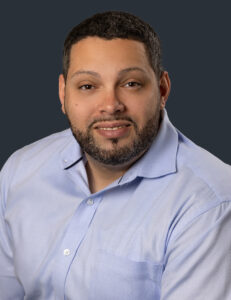
A licensed psychiatrist (MD) who serves as our collaborating physician.
When first-line treatment isn't enough
Alongside everyday psychiatric care, we offer advanced, evidence-based options for when therapy and medication haven't been enough — including two interventional treatments most local clinics don't provide.
Non-invasive, FDA-cleared brain stimulation for depression, OCD, and anxiety that hasn't responded to medication. Standard 10Hz rTMS and iTBS/Express TMS on our Magstim Horizon 3.0.
Learn more →In-office, REMS-certified, FDA-approved nasal spray for treatment-resistant depression — given under monitoring. Not IV or compounded ketamine.
Learn more →Careful, ongoing psychiatric prescribing tailored to your response over time — on its own or alongside TMS or Spravato.
Learn more →Evidence-based psychotherapy — CBT, mindfulness, and more — on its own or combined with medication for lasting change.
Learn more →Your treatment path
Care isn't one straight line. Here's how the path branches — and when first-line treatment isn't enough, what your options are.
Non-first-line and augmentation strategies beyond the usual starting options.
In our clinicEMDR, CBT, and other approaches matched to you.
In-house or by referralNon-invasive, FDA-cleared brain stimulation, done in-office.
In our clinicIn-office, REMS-certified, FDA-approved nasal spray.
In our clinicWe provide medication management, therapy, TMS, and Spravato in-house, and refer out for the rest. Which options fit depends on your diagnosis — TMS and Spravato are FDA-cleared for depression, while treatment-resistant anxiety is treated mainly with medication and therapy strategies. Candidacy is always determined clinically.
Conditions
We care for the full range of psychiatric conditions — with particular focus and depth in treatment-resistant depression, treatment-resistant anxiety, depression, anxiety, and ADHD. Every condition gets evidence-based care.
Depression that hasn't responded to two or more treatments — where TMS and Spravato can help.
Evidence-based medication and therapy for generalized, social, and panic-related anxiety — including anxiety that hasn't responded to first-line treatment.
Medication management and therapy for major depressive disorder.
Comprehensive evaluation and ongoing management for adults and adolescents.
Medication management, ERP therapy by telehealth, and FDA-cleared TMS (adults) for OCD that hasn't responded.
Trauma-informed treatment for post-traumatic stress.
Diagnostic clarity and mood-stabilizing medication management.
We treat the full range of psychiatric conditions — if you're struggling, reach out and we'll help or connect you to the right care.
Not responding to the first treatment — or the second — is more common than people think. We'll help you find what actually fits.


Who am I
"I know what it's like to feel out of step with a world that wasn't built for the way your brain works. I have ADHD, and it's why I do this work. At Exxceed Wellness, I help adults who feel stuck after standard treatments haven't worked, with medication management and options like TMS and Spravato for depression that hasn't responded to anything else. You'll be heard, and we'll build a plan that fits your life."
I am a board-certified Psychiatric Mental Health Nurse Practitioner, licensed in California to diagnose psychiatric-mental health conditions, prescribe medications, and provide psychotherapy. I earned my Bachelor of Science in Nursing and Juris Doctor from the University of Santo Tomas, and my advanced practice degree from Walden University.
Since 2004, I have worked extensively across inpatient acute care and behavioral psychiatric units — adolescents, acute adults, geriatric med-psych, and psychiatric intensive care — centered on the significantly impacted, underserved population. I specialize in depression, anxiety, substance use, and ADHD, grounded in a harm-reduction, trauma-informed, whole-person model. The care I render is always client-centered and non-judgmental.
Pronouns: she/her
Answers to common questions about psychiatric consultation, TMS therapy, Spravato (esketamine), and treatment-resistant depression at Exxceed Wellness in Hayward, CA. This is general education, not medical advice for your specific situation. If your question isn't answered here, please contact us.
Exxceed Wellness is a psychiatric practice in Hayward, California, owned and led by a psychiatric mental health nurse practitioner. The practice specializes in treatment-resistant depression and offers TMS therapy, Spravato (esketamine), adult ADHD assessment and medication management. TMS and Spravato are provided in person at the Hayward clinic. Evaluation, medication management and ADHD care are also available by telehealth across California.
Care is provided by Nefretiri Abat, J.D., PMHNP-BC, a board-certified psychiatric mental health nurse practitioner and the founder of the practice, working with a clinical team. She is a REMS-certified Spravato provider.
The clinic is at 21297 Foothill Blvd, Suite 203, Hayward, CA 94541, serving Hayward, Castro Valley, San Lorenzo, San Leandro, Union City, Newark and Fremont. Visits are by appointment only and there are no walk-ins. The phone line is (415) 636-9700, Monday to Friday 8am to 8pm and Saturday 9am to 5pm.
Yes. New patients are usually seen within a week. TMS and Spravato start dates additionally depend on insurance authorization, which the practice prepares and submits.
Exxceed Wellness is in network with Aetna, Anthem Blue Cross Blue Shield including out-of-state BCBS BlueCard PPO, Cigna, UnitedHealthcare and Medicare. The practice is not in network with Kaiser Permanente, Blue Shield of California or Medi-Cal. Patients with those plans can still be seen on a self-pay basis with a superbill for possible out-of-network reimbursement.
New patients are usually seen within about a week. Starting TMS or Spravato takes longer, because insurance has to authorize the treatment first. We verify your benefits and handle the prior authorization, and that timeline depends on the insurer rather than on our availability.
We provide psychiatric care for depression and treatment-resistant depression, anxiety, OCD, and ADHD. Alongside medication management, we offer two interventional treatments, TMS and Spravato (esketamine), for depression that hasn't responded to standard care.
Your initial visit is a thorough evaluation. We review your history, current symptoms, past treatments, and goals, then discuss the options that fit your situation and build a treatment plan together. It is a conversation, not a quick screening.
Both. Our clinic is at 21297 Foothill Blvd, Ste 203, Hayward, CA, where in-office treatments such as TMS and Spravato are provided. In-person visits are by appointment only and we do not accept walk-ins. We also see patients by secure telehealth across California for services that can be delivered remotely, including consultations and medication management.
Yes. Starting, adjusting, and monitoring psychiatric medications is a core part of our care - on its own or alongside TMS or Spravato.
No. You can schedule directly with our practice. A referral from another provider is welcome but not required.
There is nothing to prepare. The first appointment is a consultation and a mapping session rather than a treatment: you wear a white head covering while the provider and TMS assistant mark the coil position and determine the level of stimulation you need. It takes about one to one and a half hours, and treatment begins at the following visit. Get a full night of sleep, eat as you normally would, take your usual medications, and arrive with clean, dry hair and no hair products, and remove metal clips and any jewelry worn around the head, including earrings. Full preparation guide
Transcranial magnetic stimulation (TMS) uses focused magnetic pulses to stimulate the brain regions involved in mood regulation. It is non-invasive, medication-free, and done in the office. TMS is FDA-cleared for major depression (including treatment-resistant depression), anxious depression, and, as an adjunct, OCD; our Magstim Horizon 3.0 carries these clearances. More detail: our TMS therapy page and TMS for OCD.
Most patients describe TMS as a tapping or knocking sensation on the scalp rather than pain; mild scalp discomfort is the most common side effect. A typical course is five sessions per week for about six weeks (roughly 30 to 36 sessions), followed by an individualized taper. More detail: what TMS actually feels like.
Active treatment can run from about 3 minutes with newer theta-burst (iTBS / Express) protocols to roughly 20 to 40 minutes for standard protocols. With check-in and setup, plan for a short in-office visit each time. More detail: how long a TMS session takes.
Standard rTMS uses a figure-8 coil to target a focused area. iTBS, or theta-burst, is a faster stimulation pattern that delivers treatment in just a few minutes. We match the protocol to your diagnosis and coverage. More detail: theta burst and iTBS explained and deep TMS compared with standard rTMS.
TMS is often covered by California commercial plans for treatment-resistant depression, typically when there is a documented history of antidepressants that did not work. Plans generally require prior authorization, and we manage that process for you. More detail: California parity law and TMS coverage, how TMS prior authorization works, and plan guides for Aetna, Cigna, UnitedHealthcare, Anthem Blue Cross, and Medicare.
Many people maintain their improvement after completing a course of TMS. For others, occasional maintenance sessions or a relapse-prevention plan help protect the gains. We talk through what makes sense based on how you respond. More detail: maintenance and relapse prevention and coverage for maintenance or re-treatment.
TMS is generally considered when depression has not improved after at least two antidepressant trials taken at an adequate dose for an adequate length of time. Candidacy also depends on your diagnosis, medical history, and safety screening, including metal implants near the head and any seizure history. We review all of this at your evaluation. More detail: who is a candidate for TMS and what counts as an adequate antidepressant trial.
Most people who respond begin noticing change during the middle weeks of the course rather than in the first few sessions, and improvement often continues for a period after the final treatment. Response varies from person to person, and some people do not respond. We track symptoms with rating scales throughout so progress is measured rather than guessed. More detail: how long TMS takes to work.
The most common side effects are scalp discomfort at the treatment site and headache, which usually ease within the first week or two. TMS does not require sedation or anesthesia and does not carry systemic medication side effects such as weight gain or sexual dysfunction. Seizure is a rare risk, which is why screening beforehand matters. More detail: TMS side effects and what to expect.
For most patients with commercial insurance or Medicare, TMS is billed to insurance rather than paid out of pocket, so what you owe depends on your deductible, copay, and coinsurance. We verify your benefits before you begin so the expected cost is clear in advance. If we are out of network with your plan, a superbill may allow partial reimbursement. More detail: TMS cost in California and out-of-network superbills.
A denial is frequently a documentation issue rather than a final answer. Most denials turn on whether the record clearly shows enough medication trials at an adequate dose and duration. California law also gives you appeal rights, including independent medical review. We prepare and submit the appeal paperwork for you. More detail: how TMS appeals work in California and how long approval usually takes.
TMS is FDA-cleared as an adjunct treatment for OCD in adults, and there is a separate clearance for anxious depression, meaning depression that occurs with prominent anxiety. That is not the same as treating generalized anxiety on its own, and insurance rules differ by condition. More detail: TMS for OCD, TMS for anxious depression, and whether insurance covers TMS for OCD.
The right choice depends on your treatment history, schedule, transportation, and how you tolerate each option, rather than on a fixed ranking. Some people are candidates for both, and in selected cases the two are used in sequence or together. We talk through the tradeoffs with you before deciding. More detail: TMS compared with Spravato and whether TMS and Spravato can be combined.
Not responding to TMS does not mean you are out of options. The next step depends on whether you had a partial response, no response, or stopped the course early, and may involve adjusting the protocol, moving to a different interventional treatment, or revisiting your medication strategy. More detail: what to do if TMS did not work and what happens if neither TMS nor Spravato works.
The first Spravato appointment takes about two hours. Patients self-administer the nasal spray in the clinic under supervision, then remain for approximately 90 minutes of monitoring. Driving afterward is not permitted, so a designated driver or rideshare must be arranged for every treatment day. How to prepare for your first Spravato appointment.
We offer Spravato (esketamine), an FDA-approved nasal-spray form of ketamine for treatment-resistant depression, given under monitoring in our clinic. We do not provide IV, intramuscular, or compounded oral ketamine. If you are researching ketamine for depression, Spravato is the ketamine-class treatment available here. More detail: our Spravato page and how esketamine works in the brain.
Spravato is esketamine, the S-enantiomer of ketamine. It is FDA-approved specifically for treatment-resistant depression and is given as a nasal spray in a certified setting. This differs from racemic IV ketamine, which is used off-label for depression. More detail: how esketamine works in the brain.
You self-administer the nasal spray in our office under supervision, then stay for monitoring. Because of how Spravato can affect you, you are observed for at least two hours after each dose, so plan for roughly two to two and a half hours per visit. More detail: what to know before your first session.
No. You cannot drive for the rest of the day after each Spravato session, so you will need to arrange a ride home. More detail: dissociation, monitoring and planning your schedule.
The induction phase is typically twice a week for about four weeks. After that, sessions are spaced out into an individualized maintenance schedule based on your response. More detail: who is a candidate for Spravato.
Spravato is often covered for treatment-resistant depression with prior authorization. We help manage the prior-authorization process and verify your benefits before treatment begins. More detail: how Spravato prior authorization works, how to verify your benefits, and plan guides for Aetna, Cigna, UnitedHealthcare, Anthem Blue Cross, and Medicare.
Spravato is FDA-approved for treatment-resistant depression in adults, meaning depression that has not improved after at least two antidepressant trials at an adequate dose and duration, and for depressive symptoms in adults with major depression and acute suicidal thoughts or behavior. It is taken alongside an oral antidepressant rather than instead of one. Candidacy also depends on blood pressure, medical history, and whether you can arrange not to drive afterward. More detail: who is a candidate for Spravato and what counts as an adequate antidepressant trial.
Esketamine acts on the glutamate system, a different pathway from the serotonin-focused mechanism of most antidepressants. That difference is why it can help some people who have not responded to standard medications. Response still varies between individuals. More detail: how esketamine works in the brain.
Some people feel detached, floaty, or as though time is moving differently during a session. This is a recognized, usually short-lived effect that typically settles within about two hours, which is exactly why you stay in the office and are monitored. Blood pressure is also checked because it can rise temporarily. Tell us what you experience so we can adjust. More detail: dissociation, panic and planning your schedule.
For most patients with commercial insurance or Medicare, Spravato is billed to insurance rather than paid out of pocket, so your share depends on your deductible, copay, and coinsurance. There can be separate charges for the medication and for the monitoring visit. We verify benefits before you begin. If we are out of network, a superbill may allow partial reimbursement. More detail: Spravato cost in California and out-of-network superbills.
Spravato almost always requires prior authorization, and most denials come down to whether the record documents enough prior antidepressant trials at an adequate dose and duration. Denials can be appealed, and California gives you appeal rights including independent medical review. We prepare the paperwork. More detail: what insurers require in California and how long approval usually takes.
Yes to the first: Spravato is designed to be used together with an oral antidepressant, not as a replacement. As for combining interventional treatments, some people are candidates for both Spravato and TMS, either in sequence or together in selected cases. That decision depends on your history and response. More detail: whether TMS and Spravato can be combined and using both for treatment-resistant depression.
Neither is automatically first. Spravato requires in-office monitoring and someone to drive you home; TMS requires more frequent visits over several weeks but no sedation or driving restriction. Treatment history, schedule, transportation and coverage all factor in. More detail: TMS compared with Spravato and how the schedule and side effect profile differ.
A limited or absent response does not mean you are out of options. Next steps depend on how many sessions you completed and whether there was any partial improvement, and may include adjusting the oral antidepressant, moving to TMS, or revisiting the diagnosis. More detail: what to consider if Spravato did not work and what happens if neither Spravato nor TMS works.
Treatment-resistant depression generally means depression that has not improved after at least two different antidepressants taken at an adequate dose for an adequate length of time (often 6 to 8 weeks each). Only a clinician can determine this, so the best next step is an evaluation rather than self-diagnosis.
There is no one-size-fits-all answer. The right choice depends on your treatment history, lifestyle, side-effect tolerance, insurance coverage, and clinical judgment. In some cases the two can be sequenced or combined under clinical supervision. We help you weigh the options during a consultation.
A returning symptom is a signal, not a setback to face alone. Reaching out early, when sleep, energy, or mood first start to slip, gives us the most options, from adjusting your plan to considering maintenance treatment. Contact us promptly if you notice warning signs.
Yes. We treat anxiety with evidence-based options, including medication such as SSRIs, SNRIs, or buspirone and structured therapy approaches. TMS is not FDA-cleared for generalized anxiety, though it is sometimes considered off-label; we discuss what fits your situation.
Yes. OCD care combines psychiatric medication management, evidence-based ERP (exposure and response prevention) therapy delivered by telehealth, and, for OCD that hasn't responded to those, focal TMS on our Magstim Horizon 3.0 (FDA-cleared as an adjunct for OCD; this is not BrainsWay's Deep TMS). We determine the right approach based on your symptoms and history.
Yes. We provide comprehensive adult ADHD evaluations using a clinical interview, validated rating scales, and history, in our Hayward office or by California telehealth, along with treatment and medication management when appropriate.
We work with a range of insurance providers, and interventional treatments like TMS and Spravato are often covered for treatment-resistant depression with prior authorization. Coverage varies by plan, so we verify your benefits before your appointment. You can also read how to verify your benefits before starting TMS or Spravato.
We offer flexible self-pay options and will discuss costs upfront so you can make an informed decision about your care. See our guide to TMS therapy cost in California.
You can book directly through our contact page or call (415) 636-9700 (Mon-Fri 8a-8p, Sat 9a-5p). We help you choose the right first appointment and verify any insurance benefits before you come in.
Yes. Our founder is a native Tagalog speaker and our staff also speaks Filipino, so evaluations, medication visits, and family conversations can happen fully in Tagalog, in person in Hayward or by video anywhere in California. Learn more on our Filipino and Tagalog-speaking care page.
Business hours
Prefer telehealth? Appointments are scheduled statewide across California — book here.
Book a consultation and let's find the right path forward — together.
Book a consultation