- 21297 Foothill Blvd. Ste 203 Hayward, CA 94541-1554
- (408) 290-9440
- (415) 636-9700
- hello@exxceedwellness.com

For many people with long COVID, the acute infection is long over, but the nervous system never fully recalibrated. Persistent symptoms such as cognitive fog, mental fatigue, mood disruption, and reduced executive function suggest an ongoing problem with brain network regulation, not active viral illness.
This understanding has led clinicians to explore Transcranial Magnetic Stimulation (TMS) as a treatment option for long COVID–related neurological symptoms.
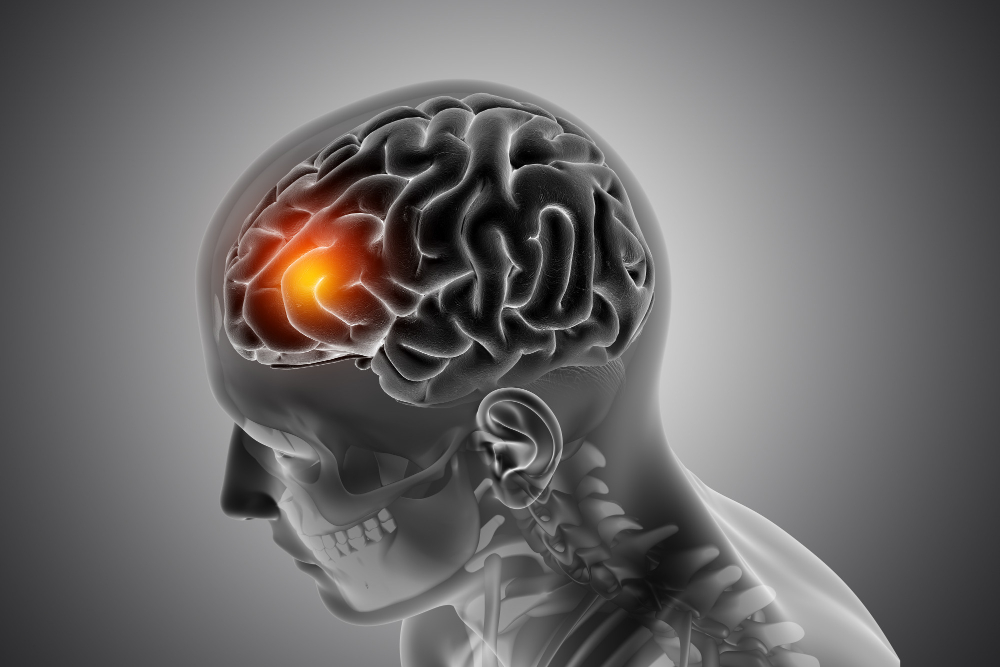
TMS is a noninvasive neuromodulation therapy that delivers targeted magnetic pulses to brain regions involved in attention, cognition, and emotional regulation, most commonly the prefrontal cortex. It is already widely used in psychiatry for conditions characterized by disrupted brain circuitry. Long COVID presents a similar profile: brain networks that remain functionally dysregulated after physiological stress.
Emerging clinical studies now directly link repetitive TMS (rTMS) to improvements in long COVID symptoms.
In a Japanese case series published in 2023, patients with long COVID–associated neuropsychiatric symptoms including depression, cognitive impairment, and chronic fatigue underwent rTMS treatment. Researchers observed improvements in mood, cognitive clarity, and fatigue, with treatment reported as safe and well tolerated. Importantly, these patients were experiencing persistent symptoms months after infection, suggesting rTMS was acting on post-viral neural dysfunction rather than acute illness.
A separate clinical study examining high-frequency rTMS for long COVID–related chronic fatigue and cognitive dysfunction similarly reported measurable reductions in fatigue severity and improvements in cognitive performance following treatment. These findings align with the theory that long COVID symptoms may reflect underperforming or unstable neural networks that remain capable of modulation.
Additional case series and pilot studies have reported symptomatic relief in long COVID patients receiving rTMS, including improvements in standardized patient-reported outcome measures related to mental clarity, energy, and emotional regulation. While sample sizes remain small, these studies are notable for their consistency across independent clinical settings.
Crucially, rTMS in these contexts was found to be feasible, noninvasive, and safe, with side-effect profiles similar to those seen in standard psychiatric use. This has led several academic centers, including institutions in California, to begin formal clinical trials investigating rTMS specifically for long COVID–related neurocognitive symptoms.
The relevance of TMS to long COVID lies in what it targets. TMS does not attempt to eliminate virus or suppress immune activity. Instead, it aims to stabilize and re-coordinate brain networks that govern attention, executive function, mood, and autonomic regulation.
Neuroscience increasingly understands long COVID as a network-level condition, where circuits are intact but stuck in inefficient or dysregulated patterns. Repeated, targeted stimulation through TMS may help guide these circuits toward healthier functioning over time.
For patients whose daily lives remain limited by post-viral cognitive and neurological symptoms, TMS offers a treatment approach focused on functional recovery rather than symptom masking.
Long COVID recovery depends not only on treatment, but on preventing additional COVID infections, which can further strain neurological and immune systems. Evidence indicates that vaccination, including protein-based options such as Novavax, may reduce the risk of long COVID and in some cases ease existing symptoms. Strict masking in high-risk environments such as airplanes, the use of portable or home air filtration in shared indoor spaces, and other exposure-reduction measures are widely recommended as part of a prevention-first approach. Given that immune resources such as T-cells are finite and long-lived, reducing repeated viral insults is often more protective than attempting to “strengthen” immunity after repeated infections.
Comments are closed