- 21297 Foothill Blvd, Ste 203 Hayward, CA 94541 (by appointment only)
- (415) 636-9700
- hello@exxceedwellness.com

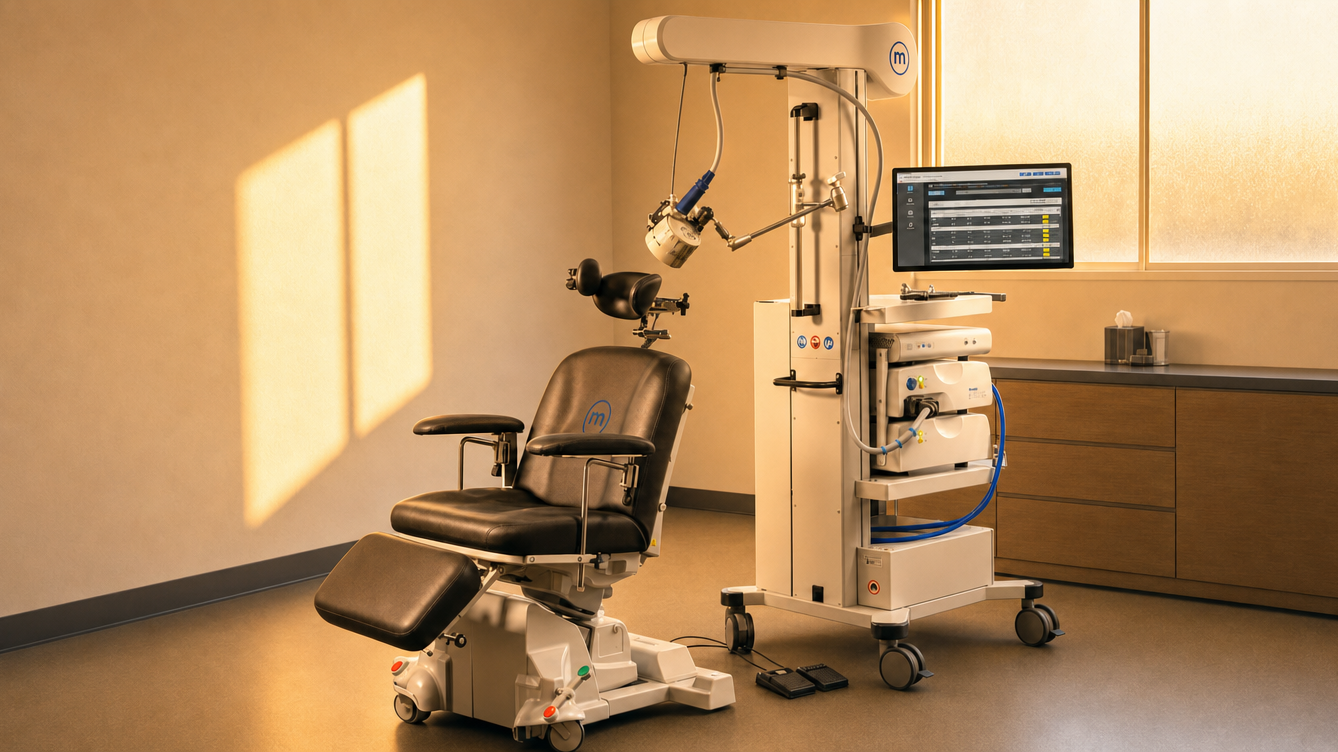
TMS Therapy
Nefretiri Abat, J.D., PMHNP-BC · California-licensed Psychiatric-Mental Health Nurse Practitioner
Transcranial magnetic stimulation (TMS) is a non-invasive, FDA-cleared treatment that uses focused magnetic pulses to stimulate areas of the brain involved in mood. At Exxceed Wellness in Hayward, CA, we offer both standard rTMS and three-minute theta-burst (iTBS) protocols for depression, including treatment-resistant depression.
The TMS protocols we offer
Most clinics offer one TMS protocol. We offer two, each with its own session length, indication scope, and clinical fit. Choosing the right protocol for you is part of the consultation.
Original Protocol
Session length: 19–37 min
FDA-cleared for: Major depressive disorder, treatment-resistant depression
The original FDA-cleared TMS protocol. Magnetic pulses are delivered to the left dorsolateral prefrontal cortex via a figure-8 coil. Strong evidence base, well-tolerated, suitable as a first-line TMS option for most depression patients.
Express Option
Session length: ~3 min
FDA-cleared for: Treatment-resistant depression
Intermittent theta-burst stimulation, also called Express TMS. Clinically equivalent to standard 10Hz rTMS for depression but delivered in a fraction of the time. Strong fit for working professionals who can’t spare 30+ minutes per daily session.
TMS at Exxceed Wellness is given in person at our clinic at 21297 Foothill Blvd, Suite 203, Hayward, CA 94541. Patients come to us from Castro Valley, San Lorenzo, San Leandro, Union City, Fremont and Newark. A standard course is 36 sessions over about nine weeks, so most patients choose a clinic close to home or work.
Nefretiri Abat, J.D., PMHNP-BC, a psychiatric mental health nurse practitioner, evaluates every TMS patient and oversees treatment. We are in-network with Aetna, Anthem Blue Cross Blue Shield, Cigna, UnitedHealthcare and Medicare, and we verify benefits and handle prior authorization before treatment starts.
Both protocols are FDA-cleared for TRD.
The most established TMS indication. Used when oral antidepressants haven’t adequately worked. Both protocols we offer are FDA-cleared for TRD.
Our Magstim Horizon 3.0 is FDA-cleared as an adjunct for adults with OCD. We do not use BrainsWay’s Deep TMS H-coil system. We offer focal figure-8 TMS for OCD that hasn’t responded adequately to SSRIs and ERP, delivered in house as an interventional option.
In March 2025 the FDA cleared TMS for adolescents ages 15 through 21 with major depressive disorder, as an add-on to antidepressant medication, not as a replacement for it. Our Magstim Horizon 3.0 carries this clearance.
This clearance applies to major depressive disorder only. It does not cover anxiety or OCD in this age group, and we do not treat below age 15. A parent or guardian is part of every candidacy decision and consent conversation.
Before treatment begins you have a psychiatric evaluation to confirm the diagnosis, review the treatments you have already tried, and check that TMS is appropriate and safe for you. This visit is also where insurance authorization starts.
Your first appointment is a brief mapping session to identify your motor threshold (the magnetic pulse intensity needed to stimulate your motor cortex) and locate the precise treatment target. This is painless and typically takes 30 to 60 minutes. Read how to prepare for your first TMS appointment.
A standard course is 36 sessions: 30 treatments given five days a week over about six weeks, followed by a six-session taper over three weeks. Some patients need fewer, and the exact number is set with your clinician. iTBS / Express TMS uses the same daily schedule but each session takes only about 3 minutes. We monitor response throughout.
After the initial course, some patients benefit from a tapered maintenance schedule. Long-term follow-up is individualized based on response, prior history, and your treatment plan with your psychiatric provider.

If your first visit is coming up, see what to bring and how to prepare.
TMS has a favorable side-effect profile compared to oral antidepressants. Most side effects are mild and short-lived.
The most serious risk associated with TMS is seizure, with an estimated risk of approximately 1 in 30,000 sessions in patients without seizure-predisposing factors. We screen carefully for risk factors before treatment begins.
For treatment-resistant depression, three categories of treatment are commonly considered: continued or augmented oral medication, Spravato (esketamine), and TMS. Each has different mechanisms, time commitments, and side-effect profiles.
| TMS | Spravato | Oral medication | |
|---|---|---|---|
| Mechanism | Focused magnetic stimulation of specific cortical regions | NMDA glutamate receptor modulation (esketamine) | Monoamine system (serotonin/norepinephrine/dopamine) |
| Session length | 3 to 37 minutes per session, depending on protocol | About 2 hours (dose plus monitoring) | Daily oral dose at home |
| Course | 30 treatments over about 6 weeks, plus a 6-session taper | Twice-weekly induction, then taper | Ongoing daily, indefinite |
| Driving day-of | Permitted | Not allowed; designated driver required | Permitted |
| Side effect profile | Scalp discomfort, mild headache | Dissociation, dizziness, transient BP changes | Variable by drug class; weight, sexual, sleep effects common |
| Best fit when | Want to avoid sedation | Faster onset preferred; active suicidal ideation | First-line for new-onset depression |
Many patients use these in combination, for example, continuing an oral antidepressant during a TMS course. The right combination is determined together at consultation.
Short answer: with insurance, most people treated for treatment-resistant depression pay a normal specialist copay, often $0 to $60 per session after their deductible. Without insurance, a full course usually runs about $6,000 to $15,000. Your total comes down to two things: how many sessions your diagnosis calls for, and how your plan is built.
Insurers authorize a set number of sessions based on your diagnosis, so this is the first thing that shapes your cost.
Under California’s mental health parity law (SB-855), commercial plans must cover medically necessary mental health care, including TMS for treatment-resistant depression, on the same terms as medical and surgical care. That is why most plans authorize a full course once the criteria are met.
Once you are scheduled, we handle the prior authorization with your plan and verify your benefits first, so you get a real number before you start. Wondering about a specific plan? Our guide on whether Kaiser covers TMS goes deeper, with payer-by-payer guides for Aetna, Cigna, UnitedHealthcare, Anthem and Medicare. Or contact us to have your benefits checked.
See our full fees and insurance page ›

TMS at Exxceed Wellness is overseen by Nefretiri Abat, J.D., PMHNP-BC, a board-certified Psychiatric-Mental Health Nurse Practitioner with twenty years of clinical training and a Juris Doctor in addition to her psychiatric credentials. Her training spans interventional psychiatric care, including the protocol selection, candidacy assessment, and ongoing clinical oversight that distinguish a careful TMS practice from a one-size-fits-all clinic.
All TMS sessions are delivered in-office at our Hayward, CA clinic. Telehealth medication management is available statewide for ongoing care between or after a TMS course.
It depends on the protocol. Standard 10Hz rTMS runs 19 to 37 minutes per session. iTBS / Express TMS runs about 3 minutes. We choose the protocol with you based on diagnosis, schedule, and clinical fit.
A standard course is 36 sessions: 30 treatments five days a week over about six weeks, then a six-session taper over three weeks. Before that you have an initial evaluation and a mapping session. Some patients need fewer sessions, and the exact number is set with your clinician. Some patients also receive a tapered maintenance schedule afterward, individualized to response.
Often yes for treatment-resistant depression with documented antidepressant failures, under California’s mental health parity law. We handle prior authorization.
With insurance, most patients treated for treatment-resistant depression pay a standard specialist copay, often $0 to $60 per session after the deductible. Without insurance, a full course usually runs about $6,000 to $15,000. See our TMS cost guide for the full breakdown.
Most patients describe it as a tapping or knocking sensation, not painful. Mild scalp discomfort at the treatment site is the most common side effect and usually resolves within the first week.
Many patients notice changes by week three or four of the treatment course. Full benefit typically emerges by the end of the six-week course. Response is monitored at every session.
If TMS doesn’t produce adequate response, Spravato, combination strategies, ECT referral, and other interventional options remain available. We don’t end the conversation when one treatment falls short.
Exomind is the brand name of a TMS device made by BTL. It delivers transcranial magnetic stimulation, the same underlying treatment we provide in Hayward with an FDA-cleared TMS system. If you searched for Exomind near you, a TMS consultation here covers the same type of care, and the usual insurance criteria for depression apply.
Schedule a TMS consultation at our Hayward, CA clinic. We’ll review your full medication history, talk through which protocol fits your diagnosis, and start the prior-authorization process if you’re a good fit.
Schedule a TMS consultation
or call (415) 636-9700
Standard 10Hz rTMS · iTBS / Express TMS · Nefretiri Abat, J.D., PMHNP-BC · Last updated: 2026-07-19
Updated August 2026 · Reviewed by Nefretiri Abat, PMHNP-BC
Deciding between the two treatments? Read TMS vs Spravato: which one is right for you? It covers who each suits, speed of response, and what each asks of your week.
Exxceed Wellness · 21297 Foothill Blvd #203, Hayward, CA 94541 · Serving Hayward, Castro Valley, San Lorenzo, San Leandro, Union City, Newark & Fremont.
Medically reviewed by Nefretiri Abat, J.D., PMHNP-BC — board-certified Psychiatric-Mental Health Nurse Practitioner.