- 21297 Foothill Blvd, Ste 203 Hayward, CA 94541 (by appointment only)
- (415) 636-9700
- hello@exxceedwellness.com

What if you could train your memory back, a little like training a muscle? Researchers tested exactly that with people in the middle of depression, and the results are worth sharing, limits and all.
In depression, memories come back vague. Ask for one specific day and you get a summary: “I used to like the beach” instead of “that sunny Saturday with my sister” (Williams et al., 2007).
Picture your memories as books in a library. The librarian who finds them is your central executive network, the part behind your forehead that runs the search. In depression she’s worn out, so she stops at the first shelf that looks close enough. So researchers tried giving her practice.
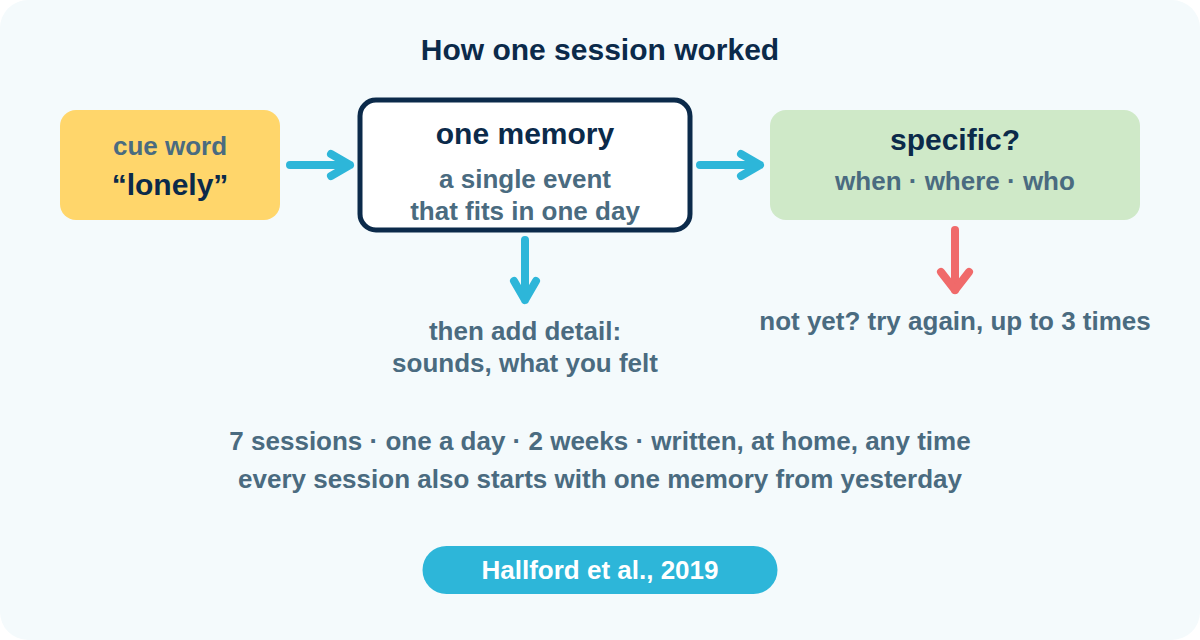
A team built a short online program called Memory Specificity Training and tested it with 245 adults in a current episode of depression (Hallford et al., 2020). It’s simpler than it sounds. Seven sessions, done at home on a computer, one a day at most, spread over two weeks. No therapist, no group. Just you, a cue word, and a memory (Hallford et al., 2019).
The screen shows a word. Some are pleasant (“happy”), some unpleasant (“lonely”), some plain (“table”), in random order. You type one memory the word brings up. The rule is strict: it has to be a single event that happened on one day, in the past. “I used to like the beach” doesn’t count. “That Saturday at the beach with my sister” does.
The program checks whether your memory is specific. If it isn’t, you get up to two more tries, with a nudge to add when it happened, where you were, and who was there. Once it passes, you’re asked to add more detail. Every session also starts the same way: one memory of something that happened yesterday. In the first three sessions you write one memory per word. From the fourth on, you write two different memories for the same word, to get better at telling specific moments apart (Hallford et al., 2019).
In that trial (Hallford et al., 2020):
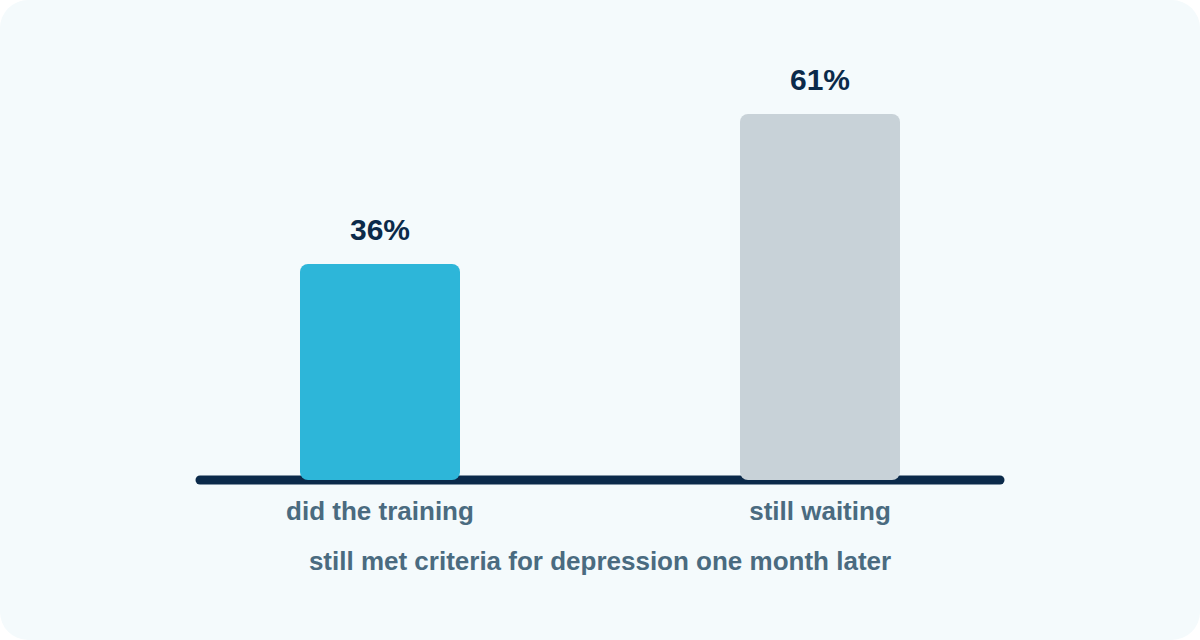
The comparison group was simply waiting, so this still needs testing against other treatments. And when the same team tried it with people aged 15 to 25, added to their usual care, the results were mixed: the memory gains faded after a month, and depression symptoms were lower at some check-ins but not others (Hallford et al., 2024). Think of it as a helpful exercise, best used alongside treatment.
The software from the study isn’t public, but the method is just rules, and the rules fit on a notebook page. This home version follows the study’s steps; it hasn’t been tested on its own, so treat it as practice for the librarian, not a replacement for care.
You need a notebook, one cue word, and about ten minutes once a day for two weeks. Any time of day works; the study let people choose. For the cue word, a random word generator online does the job, or write twenty words on slips of paper and draw one. Mix pleasant, unpleasant, and plain words. The word only has to remind you of a memory. It doesn’t have to describe it.
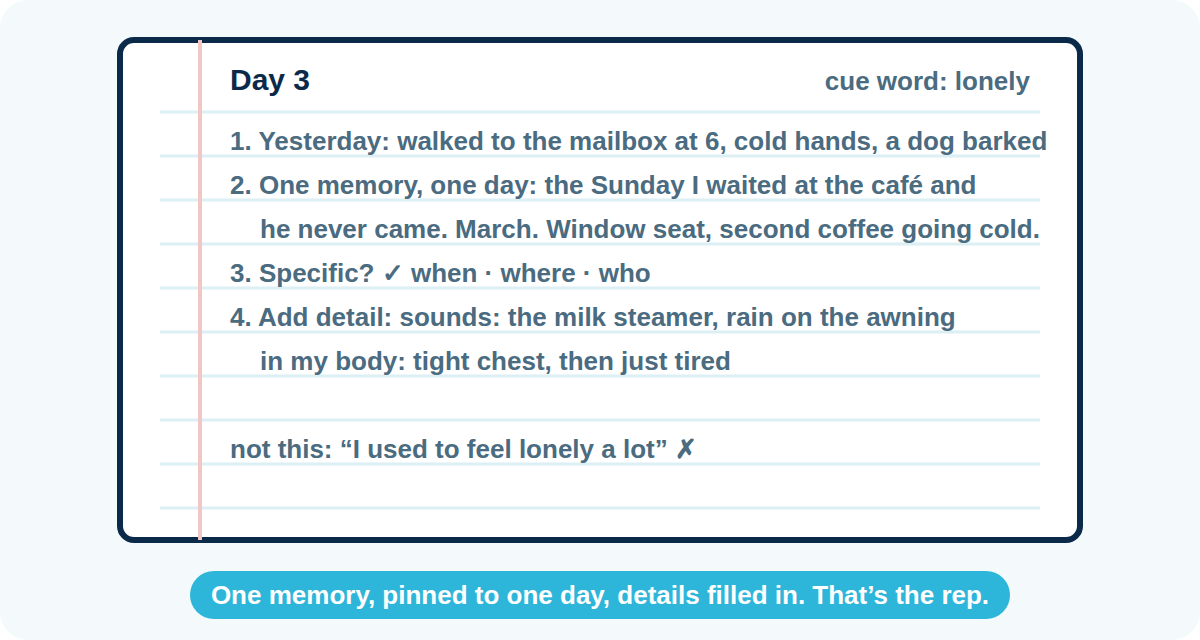
Unpleasant words will bring up unpleasant memories sometimes. That’s expected, and the study included them on purpose. The practice is the same either way: one event, one day, details filled in. If a memory is too much, pick a different word and come back to it another day.
Want a smaller start? Tonight, pick one good moment from this week. It can be tiny: a coffee that tasted right, a dog that ran up to you, a song in the car. Where exactly were you? What could you hear? What did you feel in your body? Stay with the details for a minute. That’s one rep.
Other small efforts count too. Doing small things even when you don’t feel like it, like a short walk or one text back, is an approach called behavioral activation. In a trial of 440 people, it worked as well as full cognitive behavioral therapy (Richards et al., 2016).
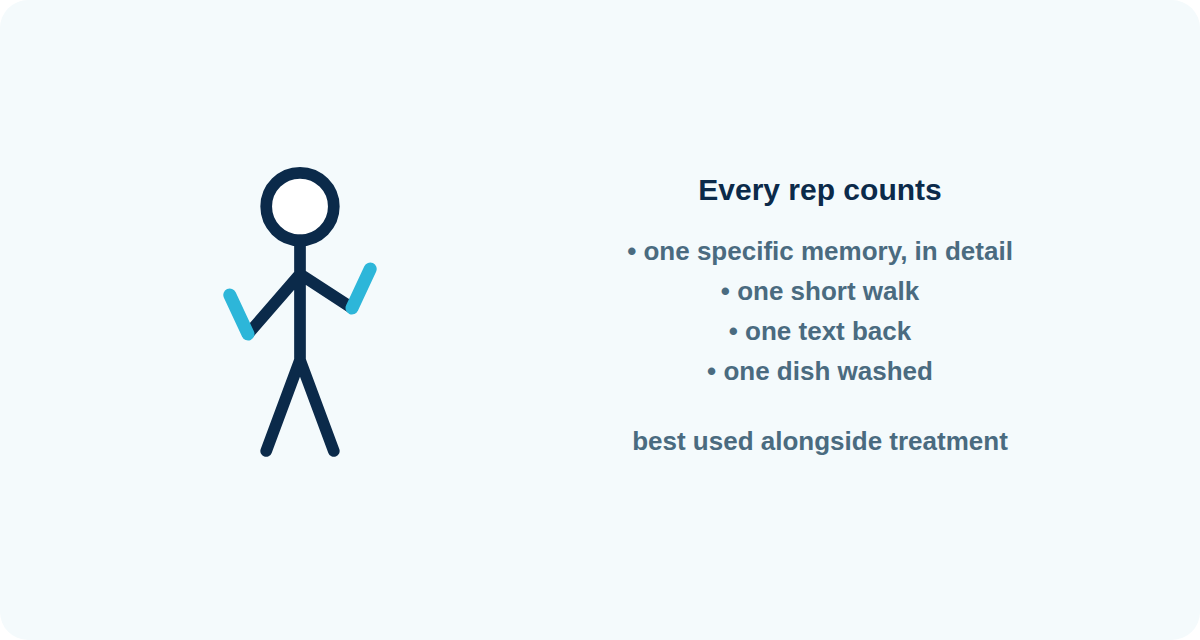
Every rep in this article is aimed at the same muscle: the librarian, your central executive network. When practice alone isn’t enough, which is common and nothing to be ashamed of, there’s more help. Talk therapy is practice at exactly this, rep after rep, with a guide. Medication helps many people too: in a review of 522 trials, every antidepressant studied worked better than a placebo (Cipriani et al., 2018). For a lot of people, that’s enough.
For some, it isn’t. If two or more antidepressants haven’t moved the needle, clinicians call that treatment-resistant depression, and there are options that work on the librarian’s wiring more directly, on top of medication.
To see why they work, picture a seesaw. The librarian’s home behind your forehead and the sad room, area 25, move in opposite directions: when one goes up, the other goes down (Mayberg et al., 1999). In depression, the sad room is up and the librarian is down. Both treatments push on that seesaw.
Spravato is a nasal spray related to ketamine. It works on the hardware. In animal studies, ketamine regrew lost connections between brain cells in the front of the brain, the librarian’s part, and those new connections were what kept the improvement going (Moda-Sava et al., 2019). In people who hadn’t improved after at least two antidepressants, adding Spravato led to more improvement within four weeks (Popova et al., 2019).
Transcranial Magnetic Stimulation (TMS) aims magnetic pulses at the librarian’s home, area 46, and it asks a bit more of you: sessions at a clinic over several weeks, and some discomfort while the pulses tap. The spots that work best are the ones most tightly tied, in opposite directions, to the sad room (Fox et al., 2012). In brain scans taken before and after a course of TMS, the sad room’s grip on the library loosened (Liston et al., 2014). In real-world clinics, 58% of people who hadn’t improved with antidepressants responded, and 37% went into remission (Carpenter et al., 2012).
Whichever route you take, the goal is the same one the memory workout had: a librarian strong enough to reach the specific moment, and a mood that lifts with it.
Prefer to watch? The full video, with the whole library story, is here.
Educational information only, not medical advice. If you are in crisis, call or text 988.