- 21297 Foothill Blvd, Ste 203 Hayward, CA 94541 (by appointment only)
- (415) 636-9700
- hello@exxceedwellness.com

What time blindness is, what a leading ADHD researcher recommends, and 14 small physical tools that keep time where you can see and touch it.
A person with ADHD knows the bill is due Friday. On Monday, it doesn’t feel urgent. On Thursday night, it suddenly does.
Psychologist Russell Barkley calls this time blindness. People with ADHD know the future is coming, but it doesn’t feel real until it’s close. Researchers have measured this. In a review of 55 studies, people with ADHD did worse than other people on every kind of timing task tested (Marx et al., 2021).
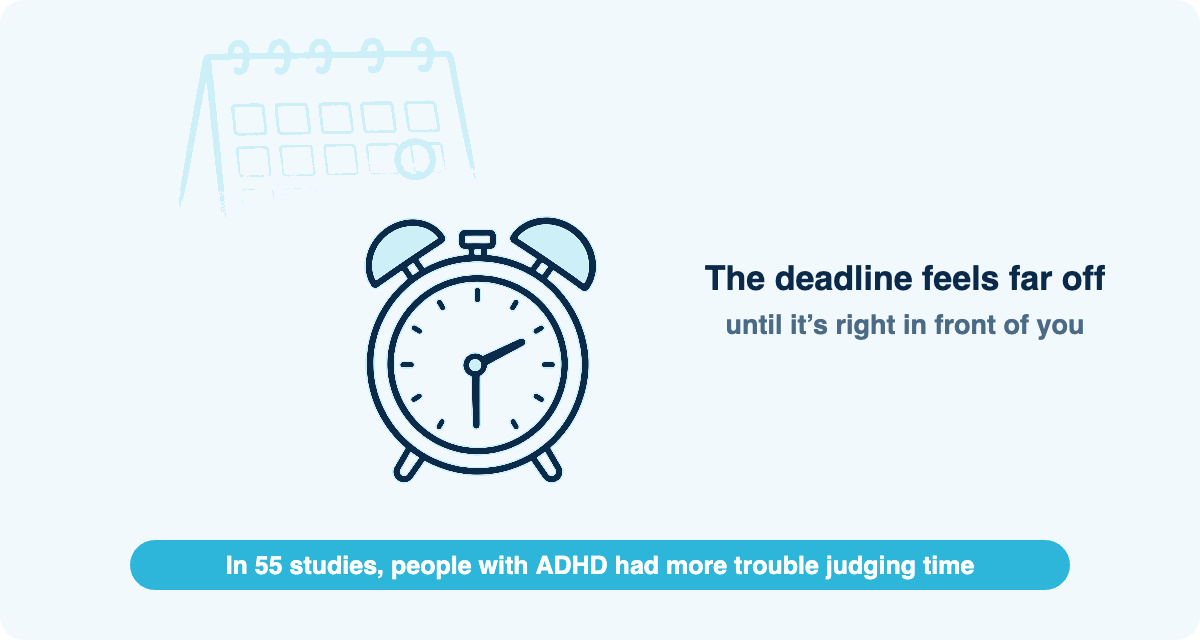
Barkley’s answer is to put time outside the head, where a person can see it. He calls this externalizing. This approach has been tested. Children with ADHD who practiced with devices that make time visible got better at managing time (Wennberg et al., 2018). Adults with ADHD improved in therapy that trained them to use planners and calendars (Safren et al., 2010; Solanto et al., 2010).
Barkley goes one step further. He tells people with ADHD to make problems “external, physical and manual” (Barkley, 2021). That means turning time and tasks into things you can hold. Digital tools are fast and smooth, and most of the time that’s a good thing. But when time already feels unreal, a little friction helps. Writing with a pen, twisting a timer and moving a card with your hand all slow you down enough to notice where the time is going.
The list below puts these ideas into practice. A few come straight from studies. Most are everyday ways to apply them, so pick the ones that fit you.
Before picking tools, choose small ones. Big tools hold a lot, and when you have ADHD, a lot at once quickly becomes too much. A full-year calendar, a long to-do pad, a thick planner, a huge phone screen and a three-hour work block all invite you to pile things on.
Small tools do the opposite. A pocket notebook fills up after a few lines. A palm-sized pad has room for three tasks. A 15 to 20 minute block of time is short enough to start without dread. When something is pocket-sized, you can take it in at a glance and finish it. Making things smaller is one of the easiest ways to keep from overwhelming yourself.
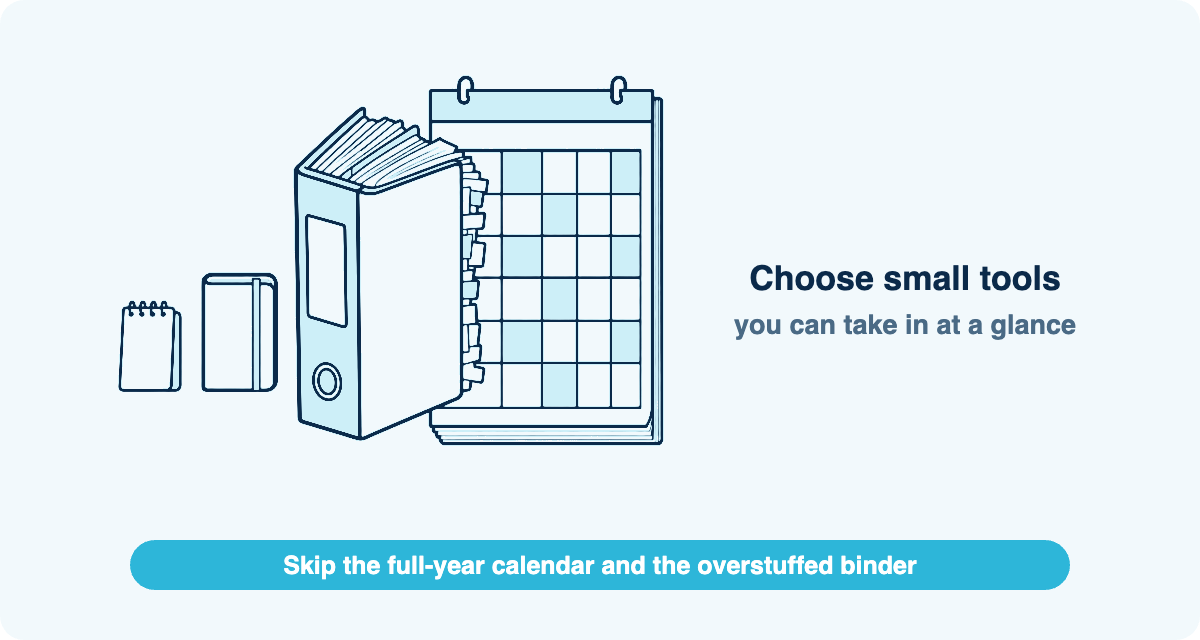
A flip clock shows the time on small cards that drop into place. Each minute, a card flips over with a soft click. You see time move and hear it pass, but you don’t have to listen to nonstop ticking. Put one where you work, and pick a design you enjoy, since you’ll glance at a clock you like more often.
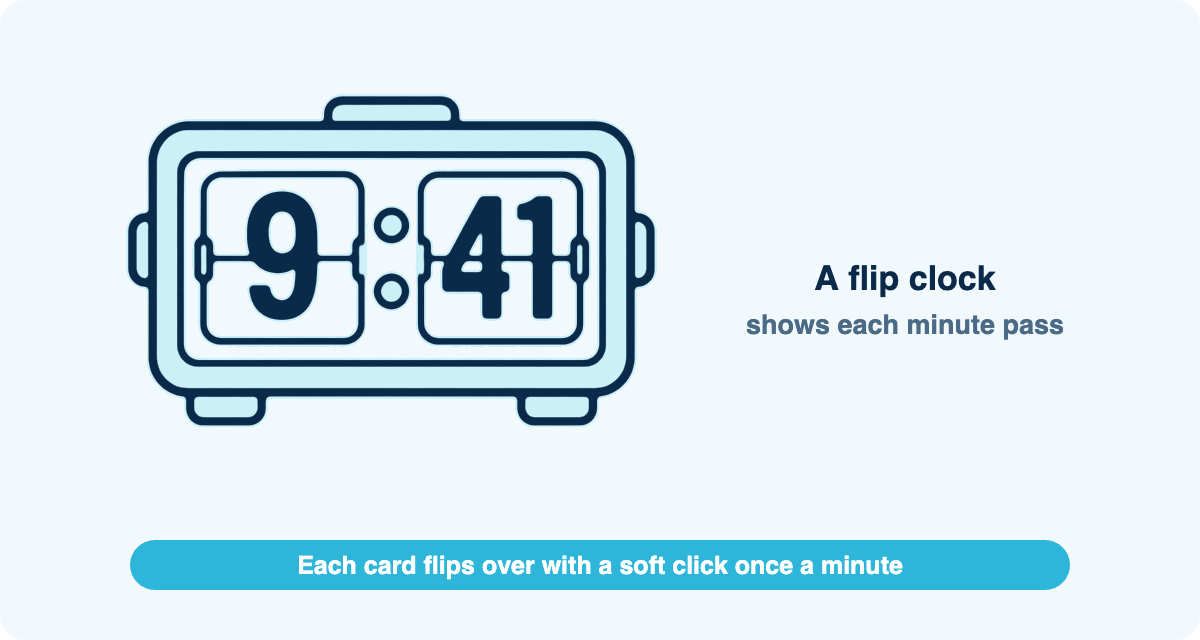
Choose a small one that shows the day of the week, the date and the month in large print. Tear off yesterday’s page each morning. Doing it by hand marks the start of a new day, and the date stays in view for the rest of it.
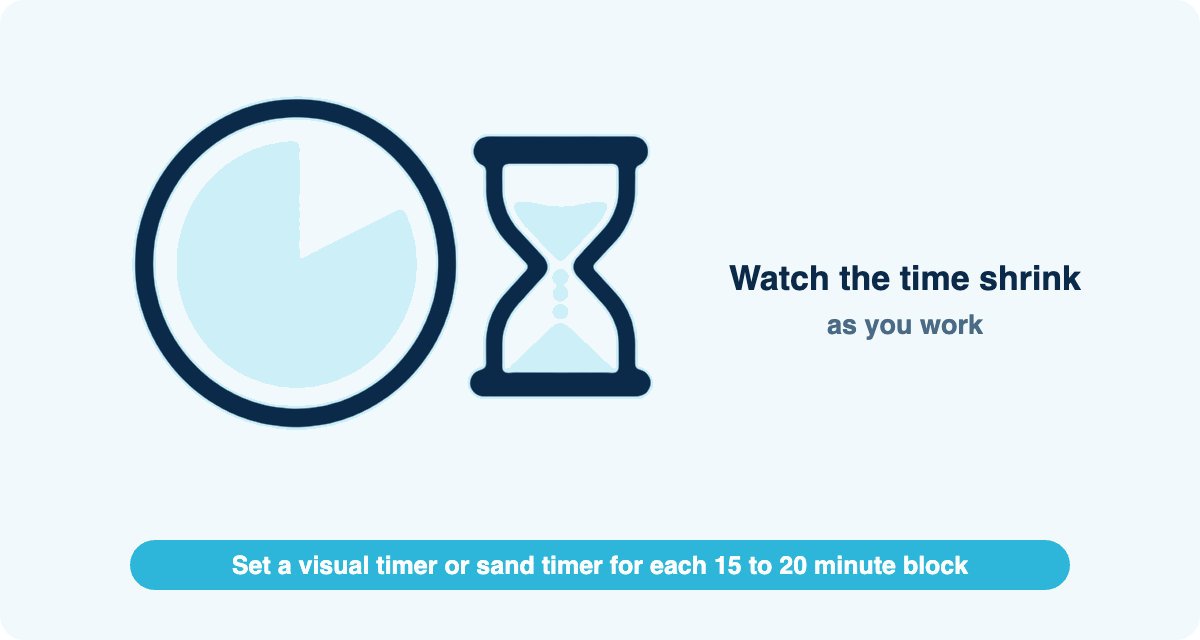
A visual timer has a colored disk that gets smaller as the minutes pass. If you like the look of one, a sand timer does the same job with falling sand. Set it for each 15 to 20 minute block of work and keep it where you can see it. Devices like these were part of the time training tested in children with ADHD (Wennberg et al., 2018).
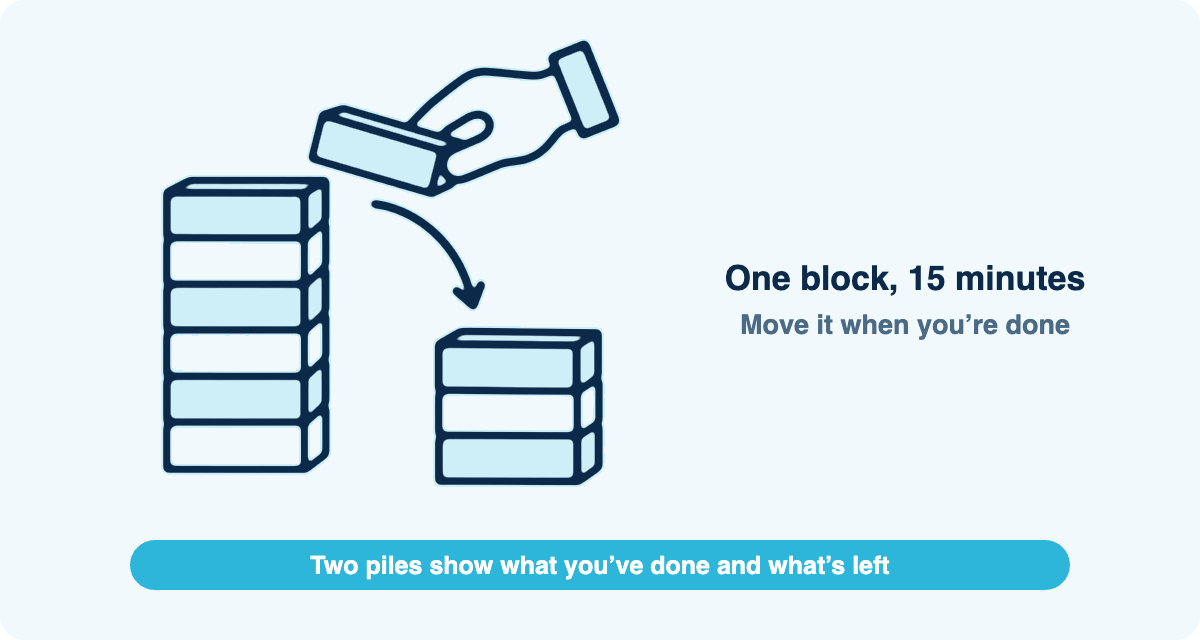
Barkley suggests breaking big projects into pieces of about 15 minutes (Barkley, 2021). You can make those pieces physical. Stack a few wooden blocks, like the ones from a tumbling tower game, on one side of your desk, and let each block stand for 15 minutes of work. Each time you finish a block of time, move one block to the other side. By the afternoon you can see how much you’ve done and how much is left.
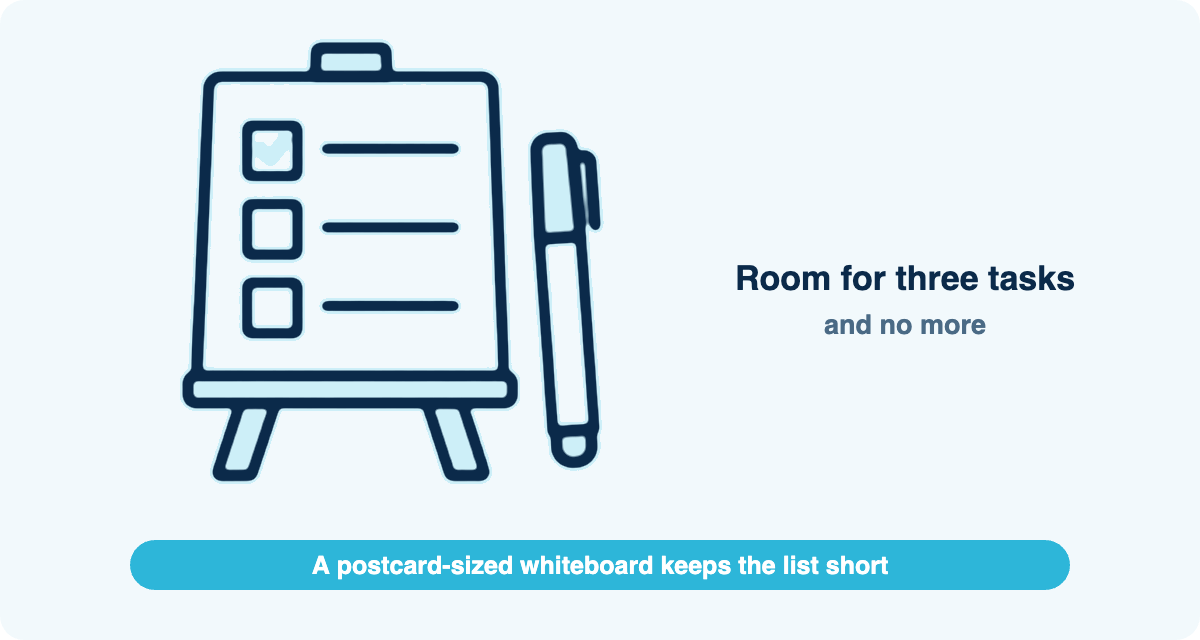
Choose a whiteboard about the size of a postcard that stands on your desk. It only has room for a few tasks, so the list can’t grow too long. Write today’s three most important things, and wipe each one off when it’s done. Barkley’s advice is to stop relying on memory and write things down (Barkley, 2021). With a small board, you can do that without ending up with a list you avoid looking at.
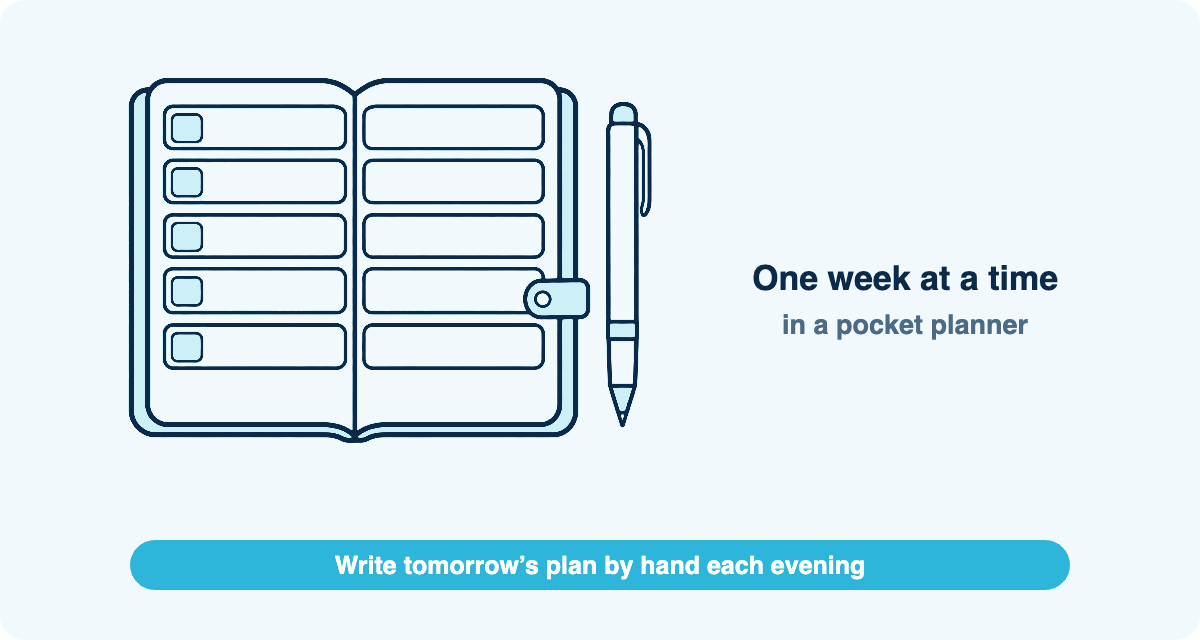
Pick a small planner that shows one week across two pages. A whole month or a whole year at once can be too much to take in. Spend five minutes each evening writing tomorrow’s plan by hand. Once the day is on paper, you can see how much fits and how much doesn’t. Then close the planner and put it away until you need it. Planning and time management were at the center of both adult ADHD therapy trials (Safren et al., 2010; Solanto et al., 2010).
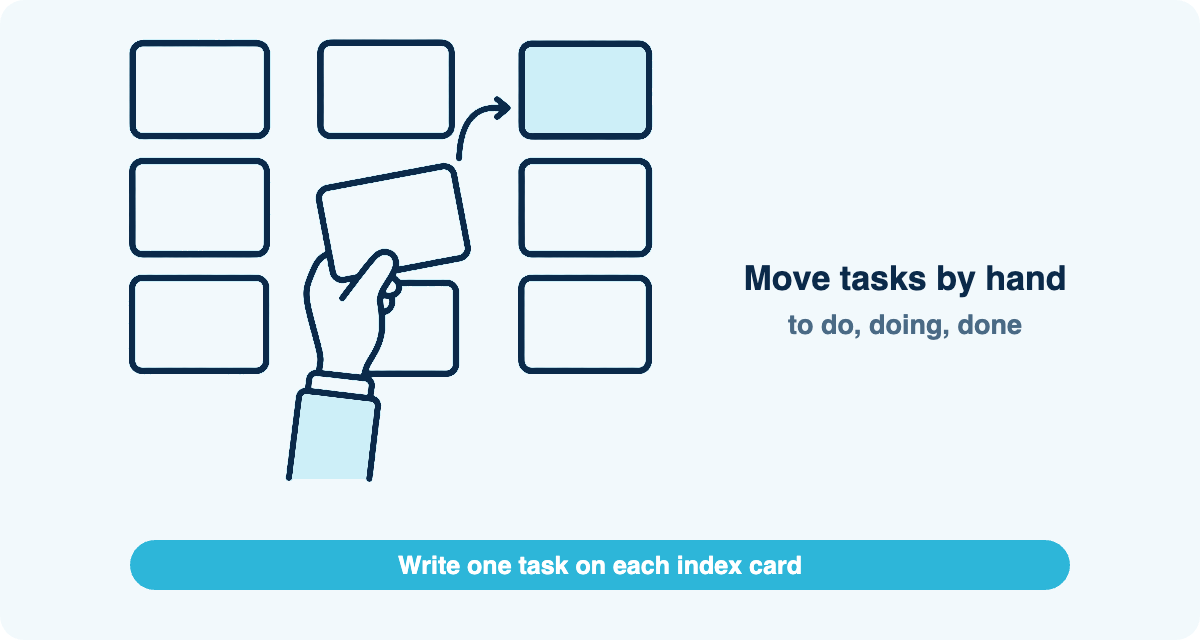
Write one task on each index card. Lay the cards out on your desk in three groups: to do, doing and done. Move each card by hand as the work moves forward. Barkley calls this making a problem physical and manual (Barkley, 2021). A big project you were dreading turns into a few cards you can pick up, sort and finish.
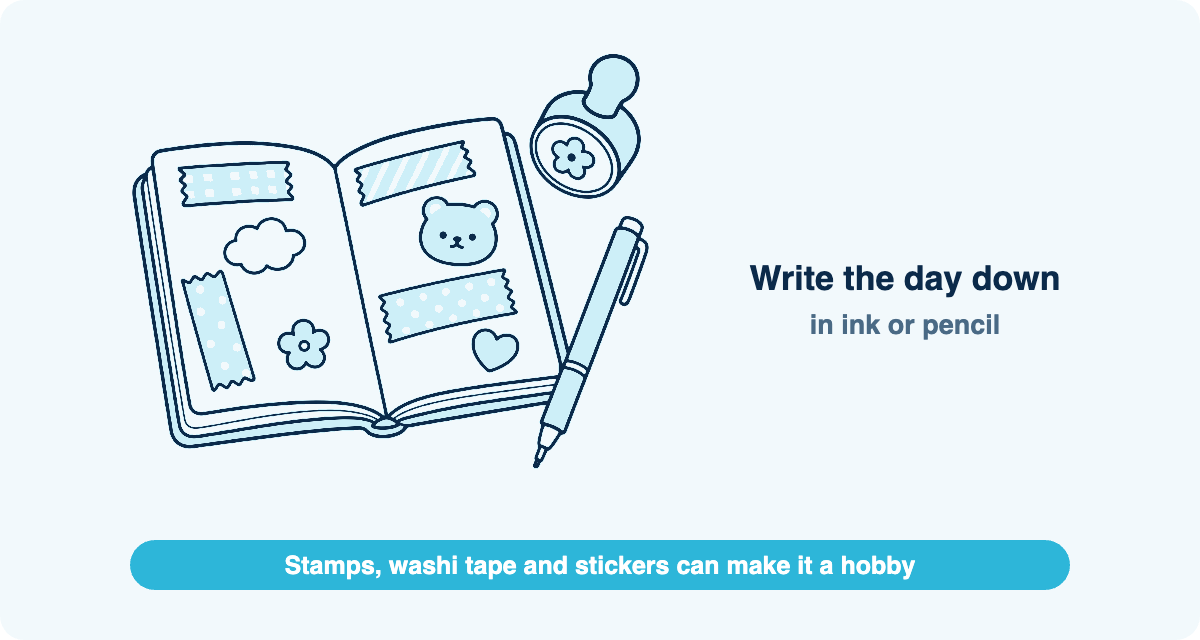
At the end of each day, write a few lines in ink or pencil in a small paper notebook. Note what you did and when. You can also make it a hobby. Japan has a rich stationery culture, with a wide range of notebooks, pens, rubber stamps, stickers and patterned paper tape (washi tape) made for decorating pages. Borrowing from it can turn a few daily lines into something you look forward to. If you enjoy your notebook, you’re more likely to keep opening it. After a few months, you have a stack of filled pages you can hold and flip through to see how your days went.
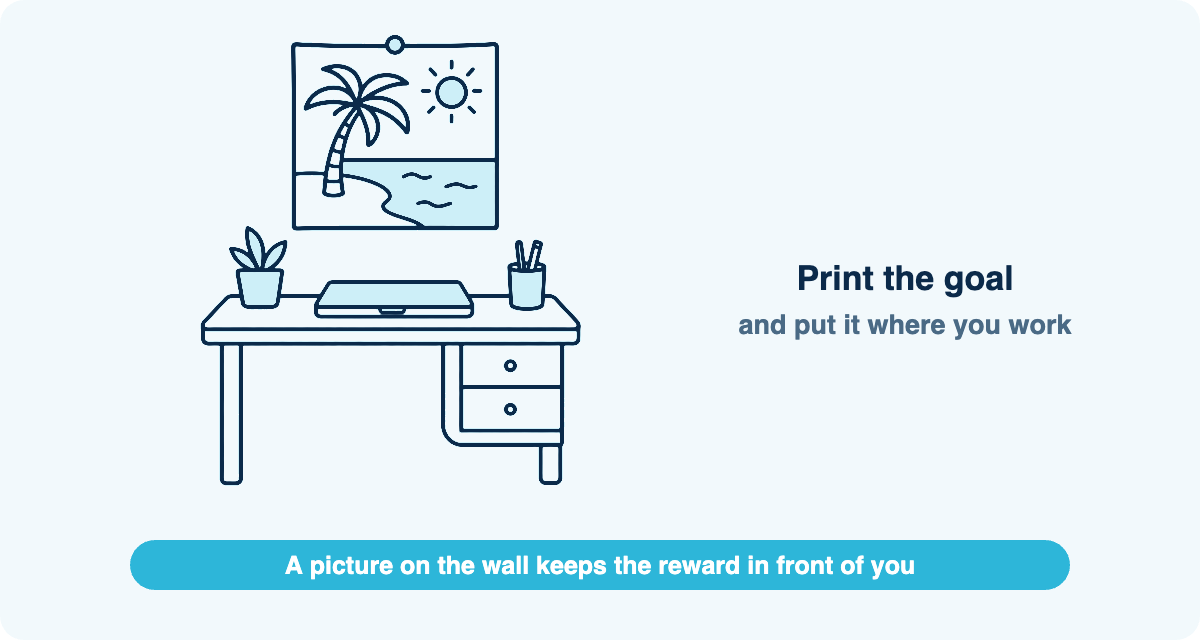
For tasks you dread, Barkley suggests picturing the reward and keeping a picture of it where you can see it (Barkley, 2021). Print a photo of the place you’re saving up to visit, the degree you’re working toward or the room you’re cleaning up. Put it where you do the work. When your mind lets the goal slip, you can look up and see it again.
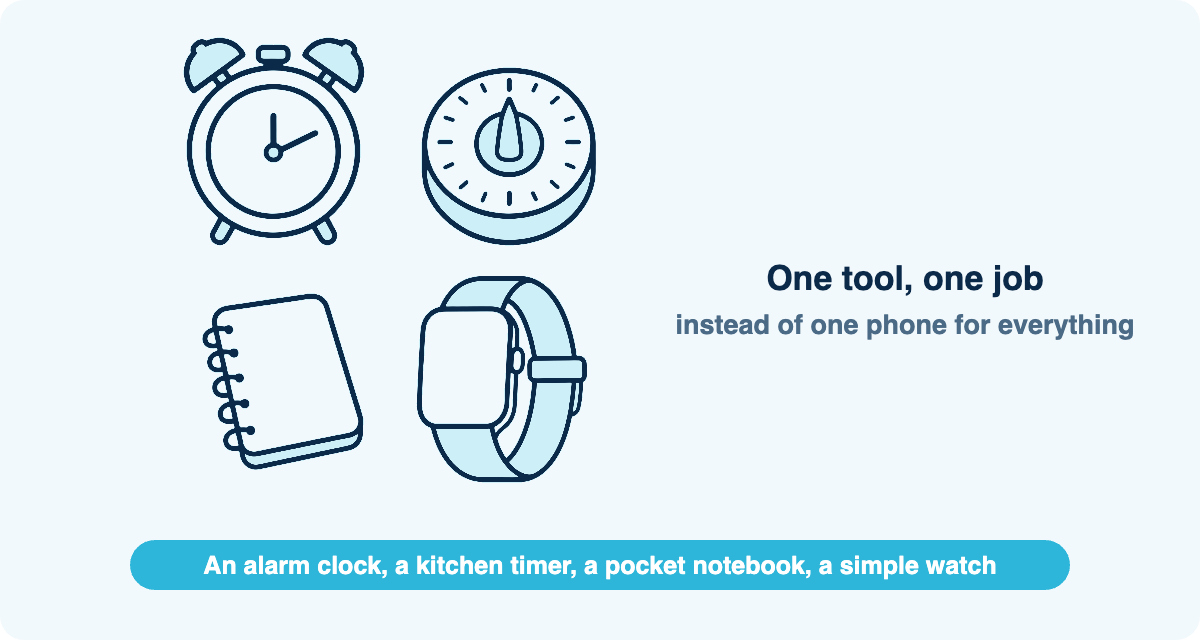
Most people keep the clock, the timer, the calendar and the to-do list on their phone, along with dozens of apps built to hold their attention. Checking the time can turn into 20 minutes of scrolling. Try giving each job its own tool: an alarm clock by the bed, a kitchen timer on the desk and a pocket notebook in your bag. Some people use a smartwatch with its own cell service for calls and texts, because there’s nothing on it to scroll through. Others lock the phone in a timed box during work hours. On the phone itself, keep only the apps you actually choose to use, and choose a smaller phone if you can. That way you pick it up on purpose, not out of habit.
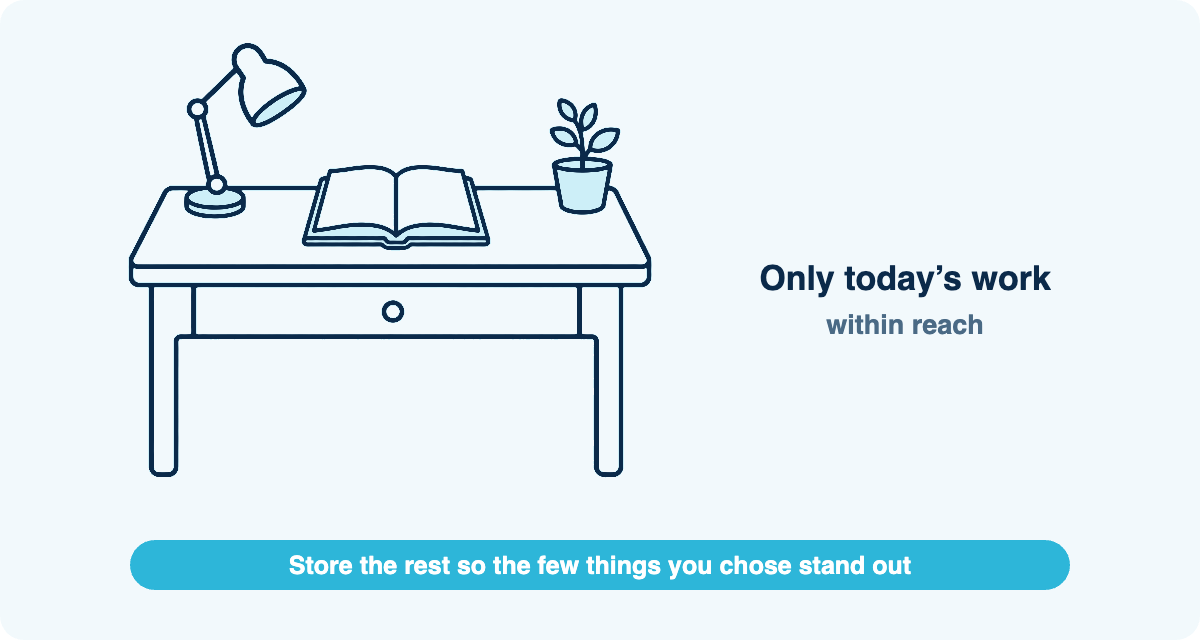
Keep only the things you’re working on right now within reach, such as the one or two books you actually want to read and this week’s project. Store everything else in drawers, boxes or another room. People can only take in so much at once. The senses gather an enormous amount of information every second, but by one estimate, conscious thinking handles only about 10 bits of it per second, roughly the amount in a handful of yes-or-no choices (Zheng & Meister, 2025). Every object in view competes for a share of that. In one study, young children in a heavily decorated classroom spent more time off task and learned less than children in a bare one (Fisher et al., 2014). That study didn’t include children with ADHD, but the idea applies. Leave open space around the few things you’ve chosen, and they’ll be easier to notice.
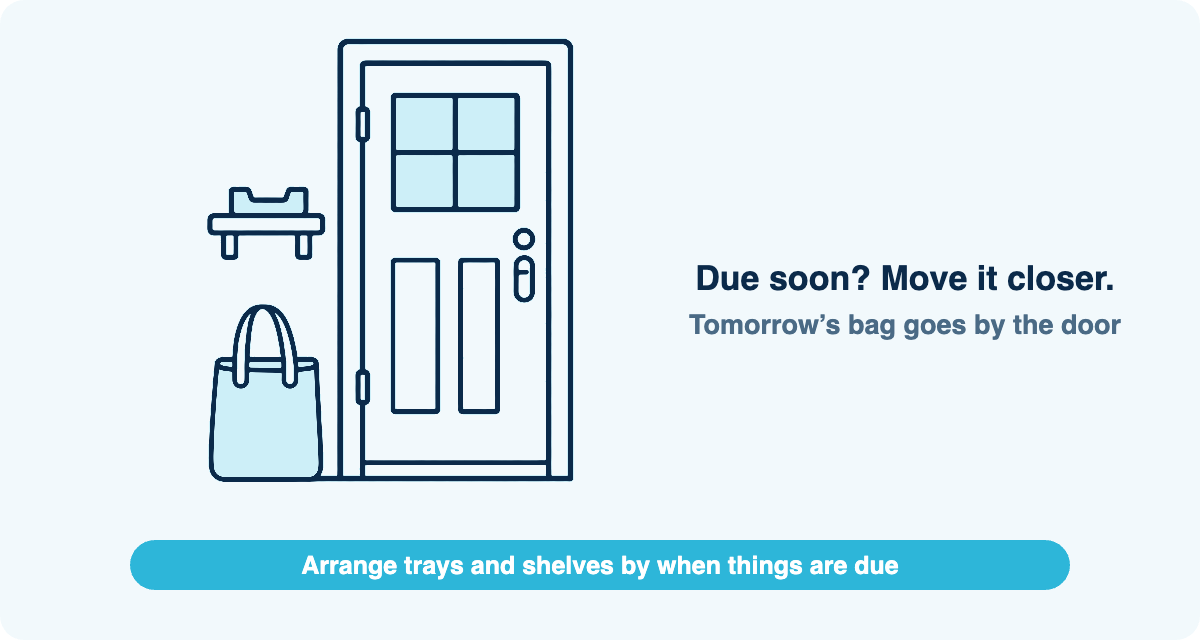
Give time a place in the room. Use one small tray for what’s due today and one shelf for this week. Keep a spot by the front door for anything that needs to leave the house tomorrow. When something becomes due sooner, move it closer. You’ll know what’s urgent by where it sits.
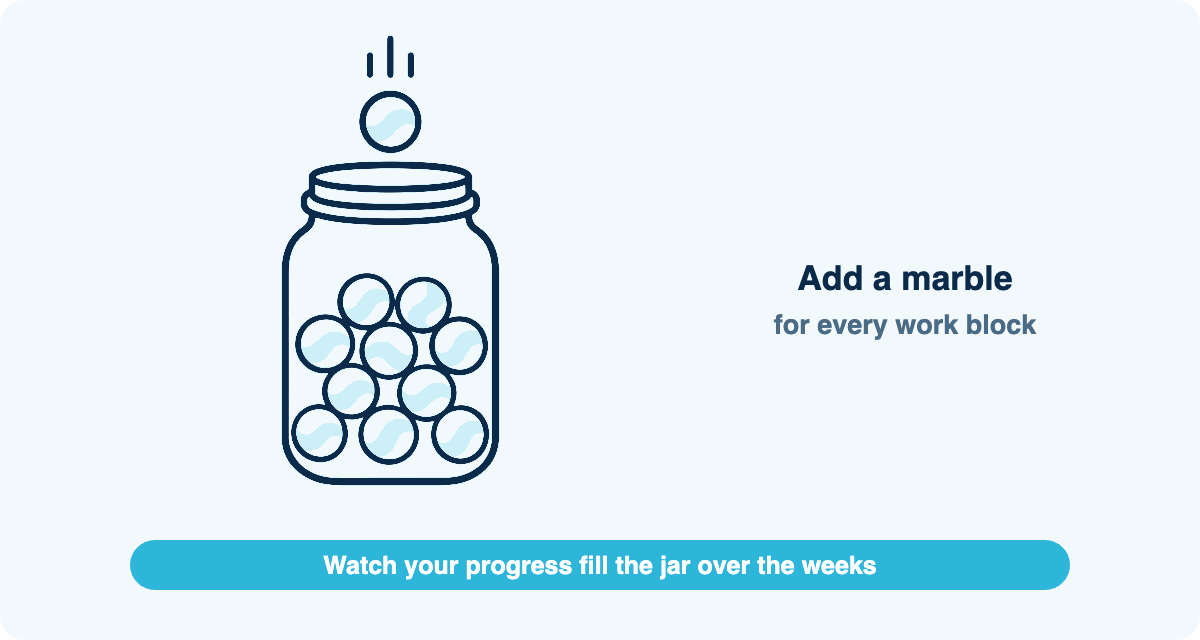
Barkley suggests giving yourself a small reward at each step of a long job (Barkley, 2021). You can make that progress visible. Drop a marble or a bead into a small clear jar each time you finish a work block or keep a habit. As the weeks go by, you can watch the jar fill with the work you’ve done.
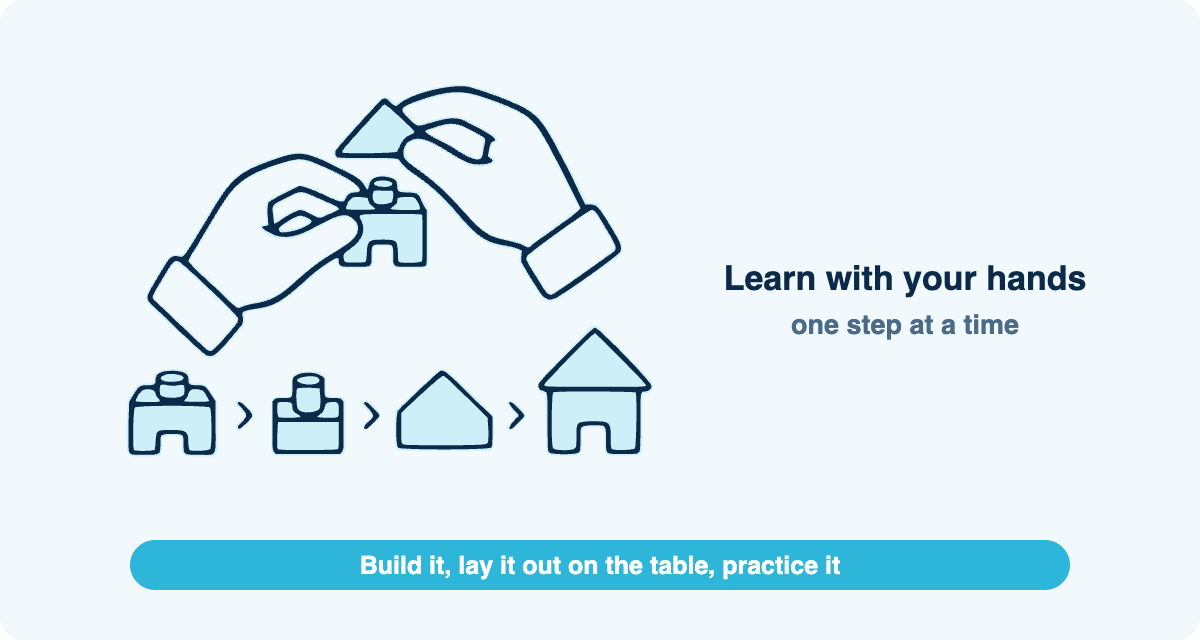
When you’re learning something new, work with real objects whenever you can. Build a model, lay the steps out on a table or practice the skill with your hands. That way you can see and touch each step instead of holding it all in your head.
Use objects and pictures more than words. A wall of sticky notes catches the eye at first and soon becomes clutter. When you can, use a thing as the reminder: the gym bag by the door, the book on the desk, the photo on the wall. Keep written notes for the few things that need words.
Change things when you stop noticing them. Over time, it’s easy to stop seeing reminders you look at every day. When that happens, move them, swap them or replace them with something new you enjoy looking at.
Barkley is clear that these tools help only while you use them. They don’t repair the brain’s sense of time, and if you take the timer away, the problem returns.
His book also puts getting evaluated and considering medication before the daily rules (Barkley, 2021). For many people, the tools work best alongside treatment.
If time keeps slipping away no matter what you try, a licensed clinician can check for ADHD, talk through medication with you and help you build a system that fits your life. Exxceed Wellness offers ADHD evaluations and treatment in Hayward and by telehealth across California.
Educational information only, not medical advice. If you are in crisis, call or text 988.