- 21297 Foothill Blvd, Ste 203 Hayward, CA 94541 (by appointment only)
- (415) 636-9700
- hello@exxceedwellness.com

Anxious people solve problems just as well as anyone. What they lose is trust in their own answer, and checking makes it worse. Three studies, plus a 3-day writing exercise.
An anxious person can know exactly what to do and still not do it.
The email sits in drafts. The application stays half-finished. The decision gets thought over one more time, then one more time after that.
From the outside, it looks like they don’t know how. Research points somewhere else. Anxiety leaves a person’s ability alone. What it wears down is their belief that they can trust their own answer.
A researcher measured two separate things in a group of adults: how good they were at solving everyday problems, and how good they felt about solving them.
The people who worried more felt less capable and less in control. Their actual problem-solving scores were no worse than anyone else’s (Davey, 1994).
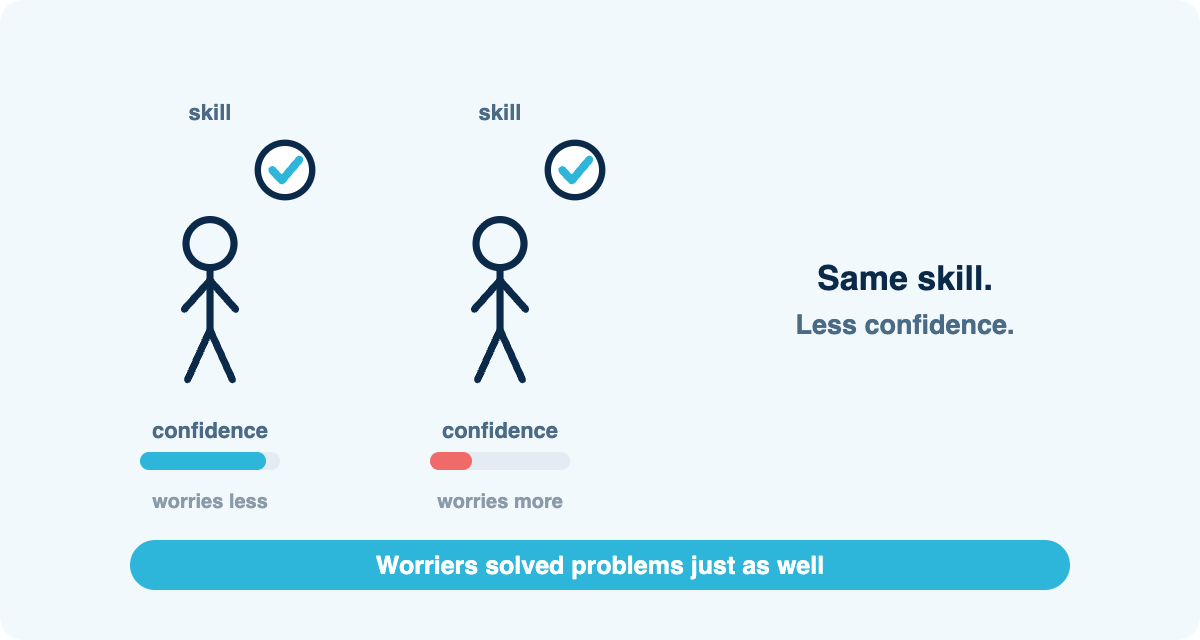
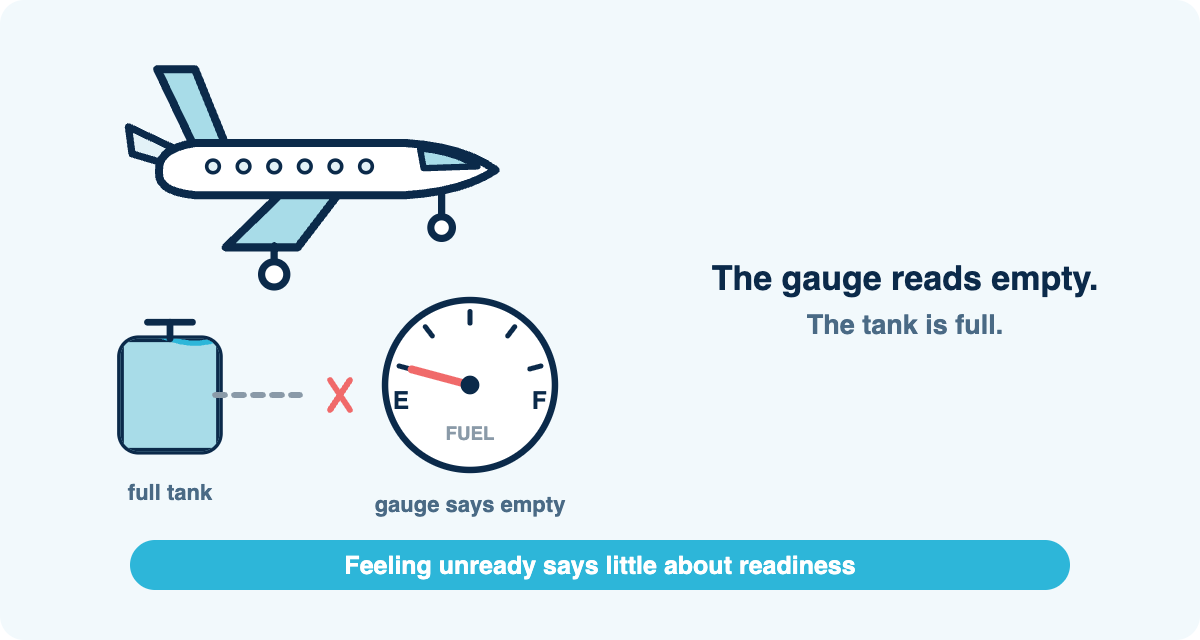
So that feeling of “I’m not ready yet” is a poor measure of readiness. The ability is already there.
Picture a plane that’s fueled and cleared for takeoff. The fuel gauge reads empty anyway, because it isn’t wired to the tank. So the pilot keeps running the pre-flight check, again and again, waiting for the needle to move.
That’s the anxious feeling of not being ready. It reads empty no matter how full the tank is.
The natural plan is to get certain first, then act. Think it through. Check it one more time. That plan rests on one idea: that checking makes you surer.
Researchers tested that idea with a gas stove on a computer screen. Healthy volunteers turned the virtual stove off and checked it. Then one group checked the stove again and again. The other group checked virtual light bulbs instead.
Afterward, both groups were asked what they remembered. Everyone remembered correctly. Accuracy was the same in both groups.
For the stove checkers, though, the memory came back faint and low on detail, and they trusted it less (van den Hout & Kindt, 2003).
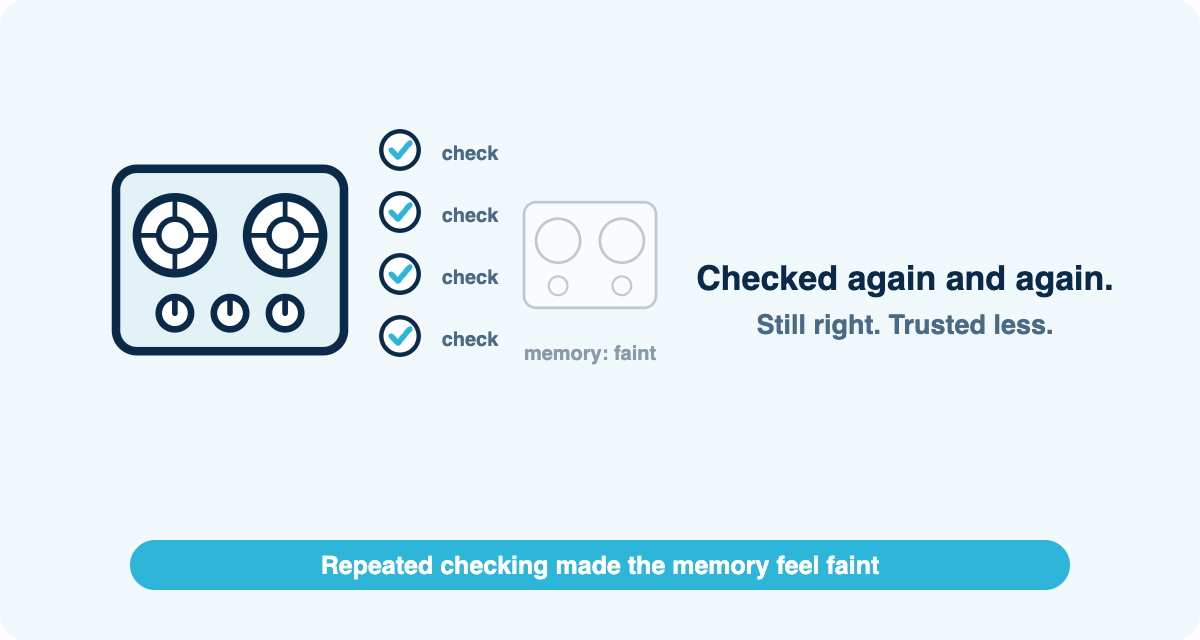
Same right answer. Less belief in it. Checking was wearing down their confidence while their memory stayed fine. The same trap shows up with reassurance: asking one more time feels like it should settle the doubt, and it rarely does.
Certainty isn’t coming. Waiting for it is what keeps the plane on the runway.
The real job is to turn the fear down far enough to take off with the doubt still there.
A study of 57 adults with generalized anxiety tested a simple version of exposure. For three days in a row, each person spent 20 minutes writing (Fracalanza et al., 2014):
A week later, only group one had improved. They worried less, pushed upsetting thoughts away less, and uncertainty bothered them less.
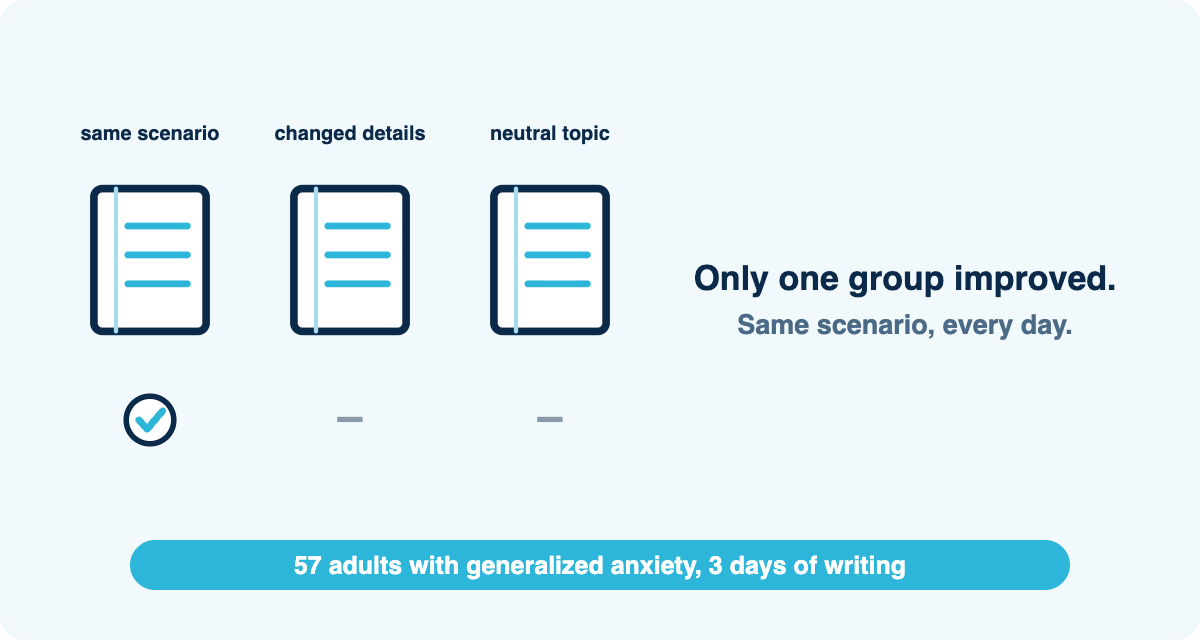
Notice what changed. Nobody got a guarantee that the bad thing wouldn’t happen. The fear simply wore out from facing the same scene again and again.
The point is to walk into the scene on purpose until it gets boring. Boring is the finish line. That’s when the fear is quiet enough to take off with the gauge still reading empty.
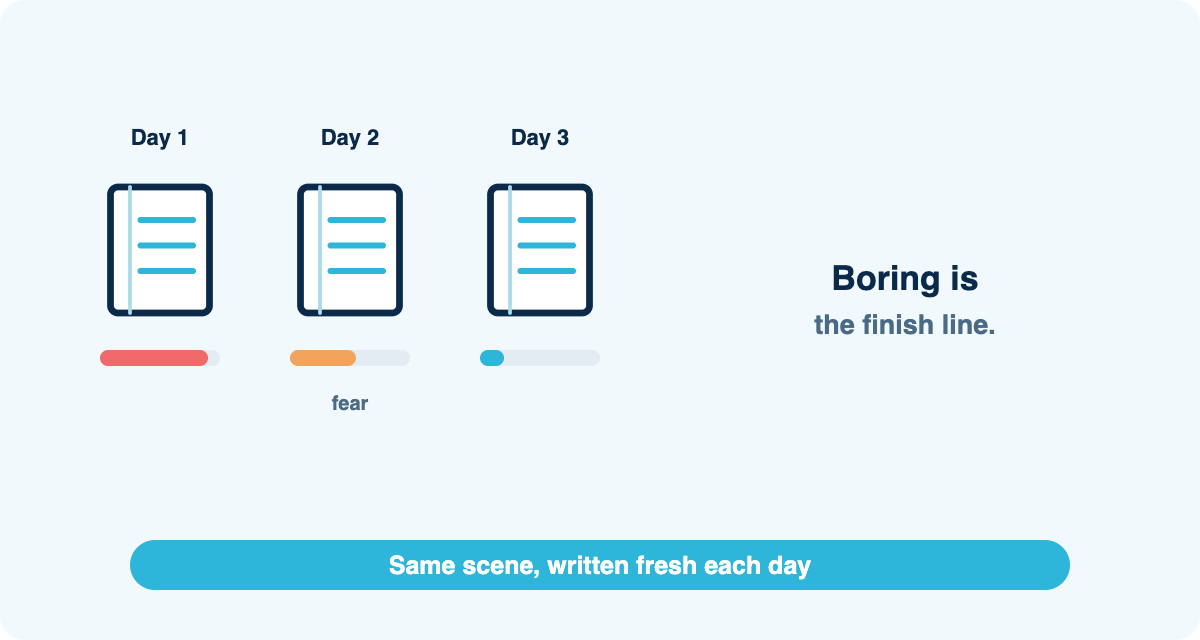
If writing makes the fear sharper instead of duller over the three days, stop.
If worry is keeping someone from work, sleep or the people they love, it’s worth a real evaluation. A licensed clinician can help sort out what’s driving it and what kind of treatment fits. Our anxiety treatment page is a good place to start.
Prefer to watch? The short is above, or watch it on YouTube.
Educational information only, not medical advice. If you are in crisis, call or text 988.