- 21297 Foothill Blvd, Ste 203 Hayward, CA 94541 (by appointment only)
- (415) 636-9700
- hello@exxceedwellness.com

Standing by the door “just in case” can stop the brain from learning a fear is safe. Here’s what the lab and therapy trials show, and how to drop these habits.
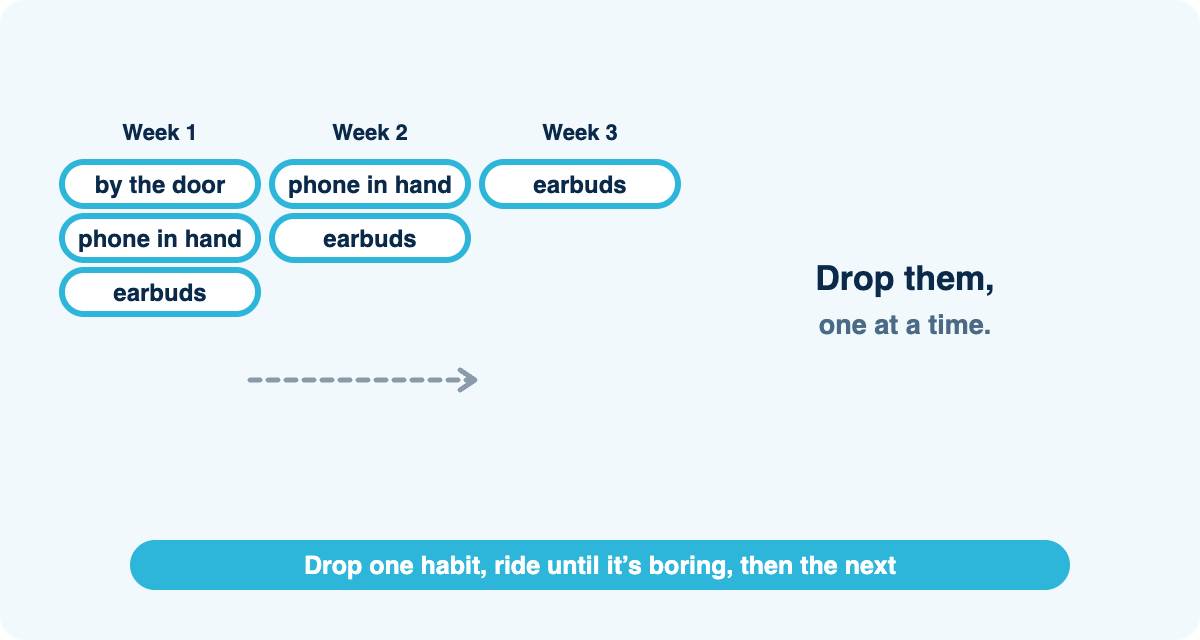
Someone who is afraid of the train has been riding it every day for months. They always stand right next to the door. Phone in hand. Earbuds in, every time.
They have done the hard part a hundred times over, and the fear hasn’t budged. The rides are working. Something else is taking the credit.
A safety behavior is a small thing a person does “just in case” while facing a fear. It makes the moment feel easier to get through.
Each one looks harmless. To understand why they can quietly keep a fear going, it helps to know how the brain learns that something is safe.
When a fear is first learned, it is stored in the amygdala, the brain’s alarm. When a person faces that fear and nothing bad happens, the brain builds a second memory in the ventromedial prefrontal cortex, a patch at the front of the brain behind the eyes, shortened to vmPFC. That second memory is the safe memory.
The safe memory gets built from surprise. The brain expects the bad thing. When it doesn’t come, the brain registers a “better than expected” moment. The bigger the surprise, the stronger the lesson. What teaches the brain is how wrong its prediction was, more than how good the moment feels.
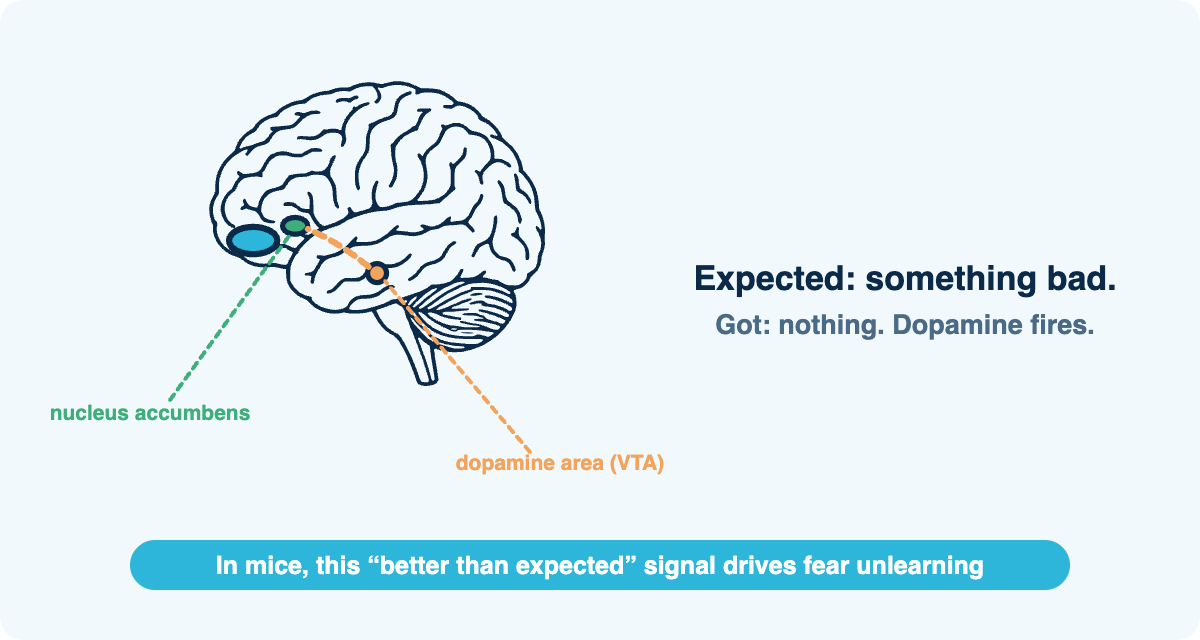
That moment has a physical signal. Deep in the midbrain is a small cluster of dopamine cells called the ventral tegmental area, or VTA. In mice, these cells fired at the exact moment an expected shock didn’t arrive. Silencing them at that moment blocked the fear from fading. Switching them on made it fade faster (Salinas-Hernández et al., 2018). In rodents, part of this signal travels to the nucleus accumbens, a deep area involved in reward, and helps the fear wind down (Luo et al., 2018).
Now add the spot by the door.
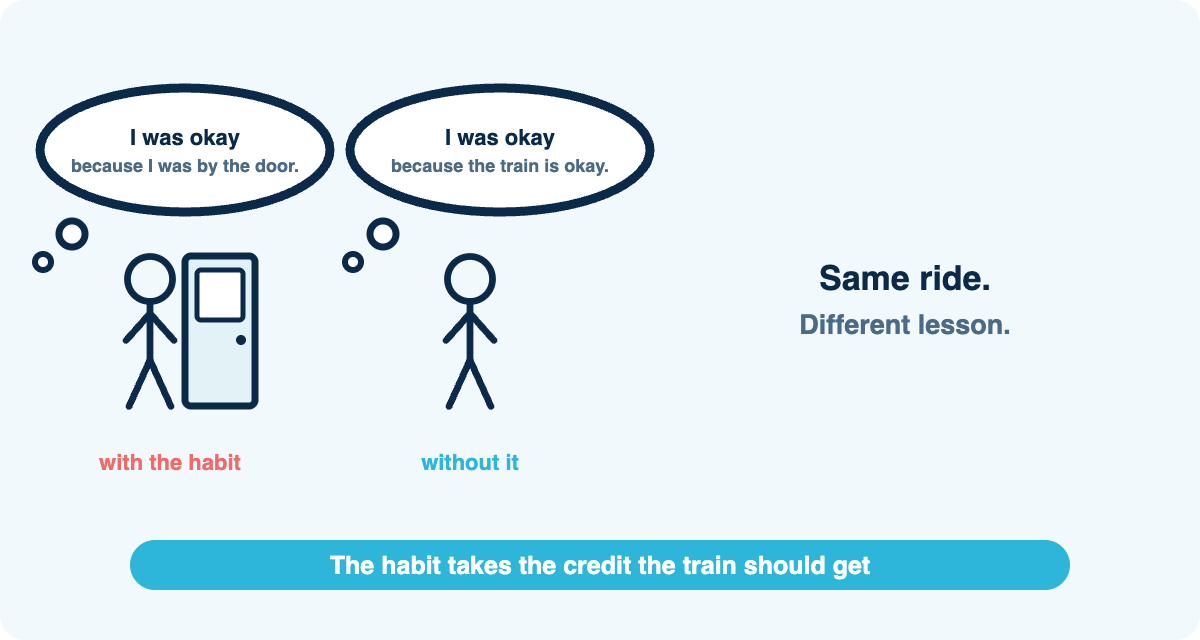
The person rides the train and nothing bad happens. But the brain has an easy explanation for why: “I was by the door. I could have gotten off.” The safety habit gets in the way twice. Standing by the door lowers how much danger the brain expects, so there is less surprise to learn from. And when nothing bad happens, the brain gives the credit to the door. The train itself doesn’t get tagged as safe.
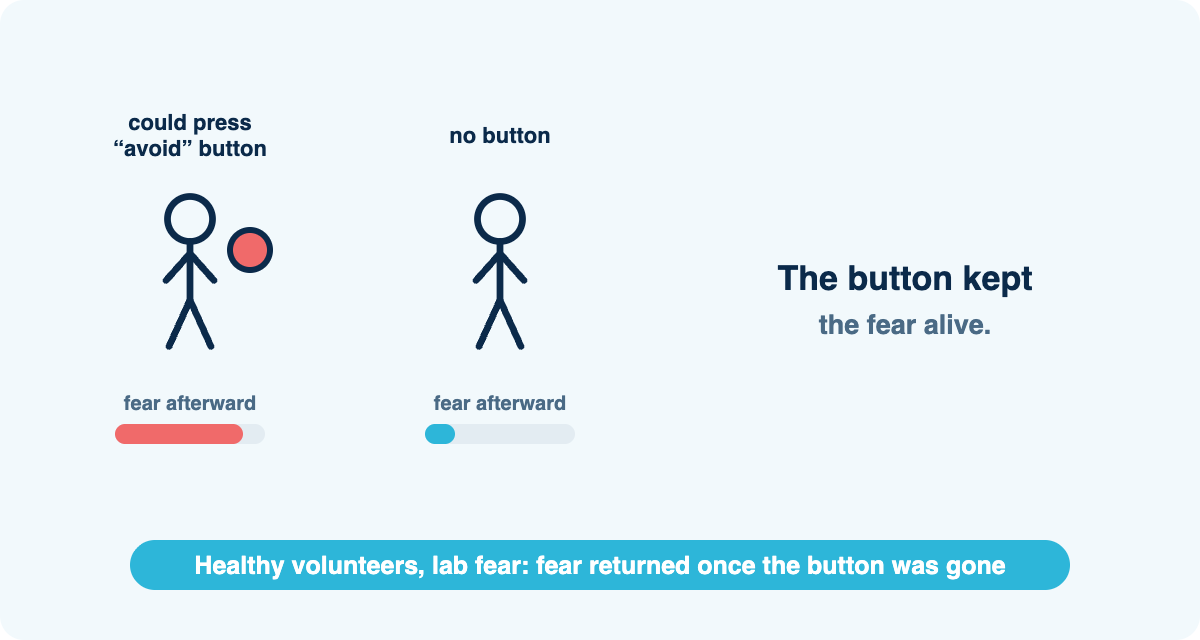
Researchers tested this in a lab. Healthy volunteers learned that certain cues came before an electric shock. Then the shocks stopped. One group could press a button they had learned would avoid the shock. The other group had no button.
The group without the button lost their fear normally. The group with the button kept expecting the shock and kept reacting to it. When the button was taken away, the fear was still there (Lovibond et al., 2009).
The same thing happened in an earlier study when a safety signal was simply present while the fear was being unlearned. Tested alone later, the fear came back (Lovibond et al., 2000). Researchers call this protection from extinction: the safety habit protects the fear from being unlearned.
If safety habits can keep a fear going, why are they so hard to give up?
Because the relief rewards the habit. Each time the person stands by the door and the ride goes fine, they feel relief. Relief works like a small reward, and the brain tends to repeat whatever came right before a reward. Here, that’s standing by the door.
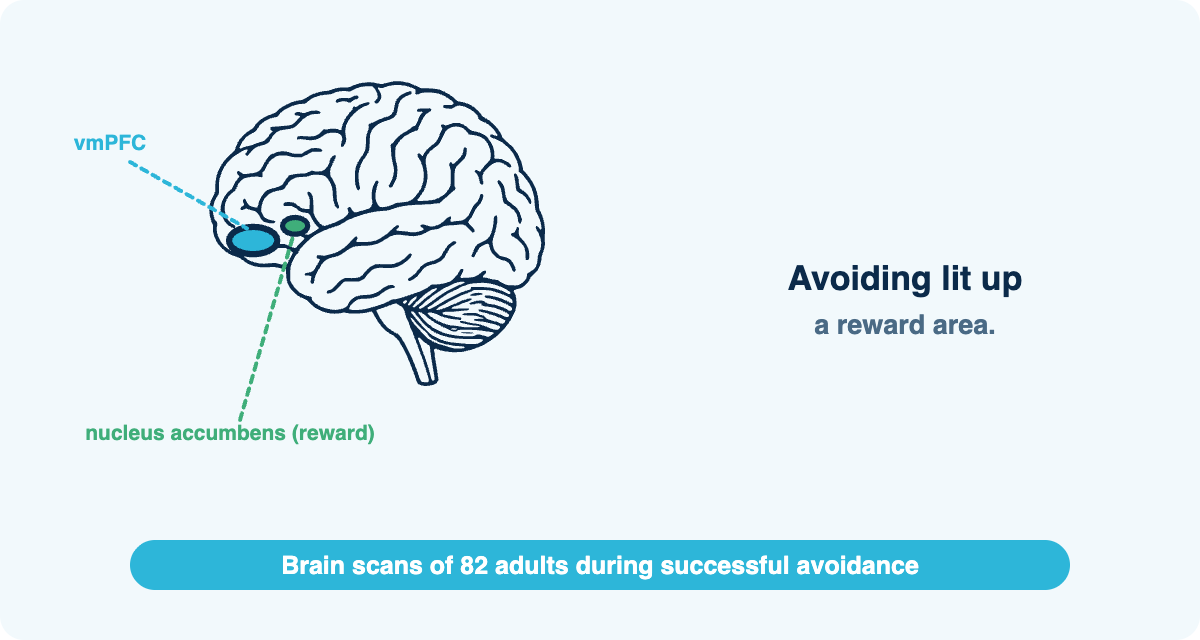
A recent brain-scan study points the same way. In 82 healthy adults, the moment of successfully avoiding a threat lit up the nucleus accumbens, a reward area, along with the vmPFC. Avoiding lit these areas up more than simply learning that something was safe (Claes et al., 2026). The study didn’t ask people how relieved they felt, so the link to relief is the researchers’ interpretation.
So the habit wins twice. It takes the credit for keeping the person safe, and it hands out a little relief every time.
Not necessarily. In real therapy, the picture is less clear than in the lab.
A major review of exposure therapy studies called the evidence on safety behaviors “limited, mixed, and controversial” (Blakey & Abramowitz, 2016). In one trial, 60 adults with a strong fear of spiders did exposure therapy either with all safety behaviors dropped or with a few allowed in a planned way. Both groups improved a lot, and they still looked the same a month later (Blakey et al., 2019).
So the goal is to notice safety habits and drop them on purpose, one at a time.
Each habit you drop gives the brain one less place to put the credit. What’s left is the lesson that matters: the train was safe all along.
If a fear is shrinking someone’s life, a licensed clinician can help plan which habits to drop first and how to face the fear without them. Our anxiety treatment page explains the options.
Educational information only, not medical advice. If you are in crisis, call or text 988.