- 21297 Foothill Blvd, Ste 203 Hayward, CA 94541 (by appointment only)
- (415) 636-9700
- hello@exxceedwellness.com

A brain-scan study, an older therapy trial and a writing study look at what happens when people imagine what they fear, and how to try it yourself.
Some fears can’t be practiced on demand. A flight happens once a year. A hard conversation happens once. The scary diagnosis is something a person waits for, not something they can rehearse.
Exposure therapy works by meeting a fear again and again. So what about the fears a person can’t meet every day? One brain-scan study tested whether imagining could do the same work.
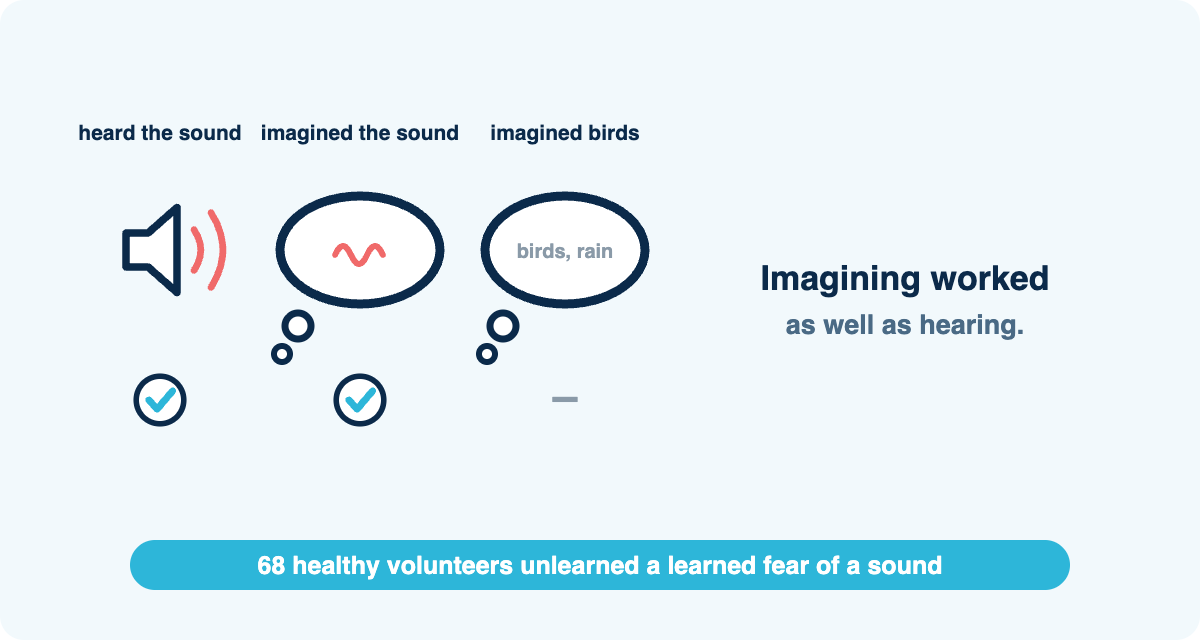
Researchers taught 68 healthy volunteers to fear a sound by pairing it with a mild shock, uncomfortable but not painful. Soon, just hearing the sound made the body react.
Then the shocks stopped, and the volunteers were split into three groups:
Afterward, everyone heard the real sound again.
Imagining the sound lowered the brain’s threat patterns and the body’s fear response as much as really hearing them. Imagining birds and rain did nothing (Reddan et al., 2018).
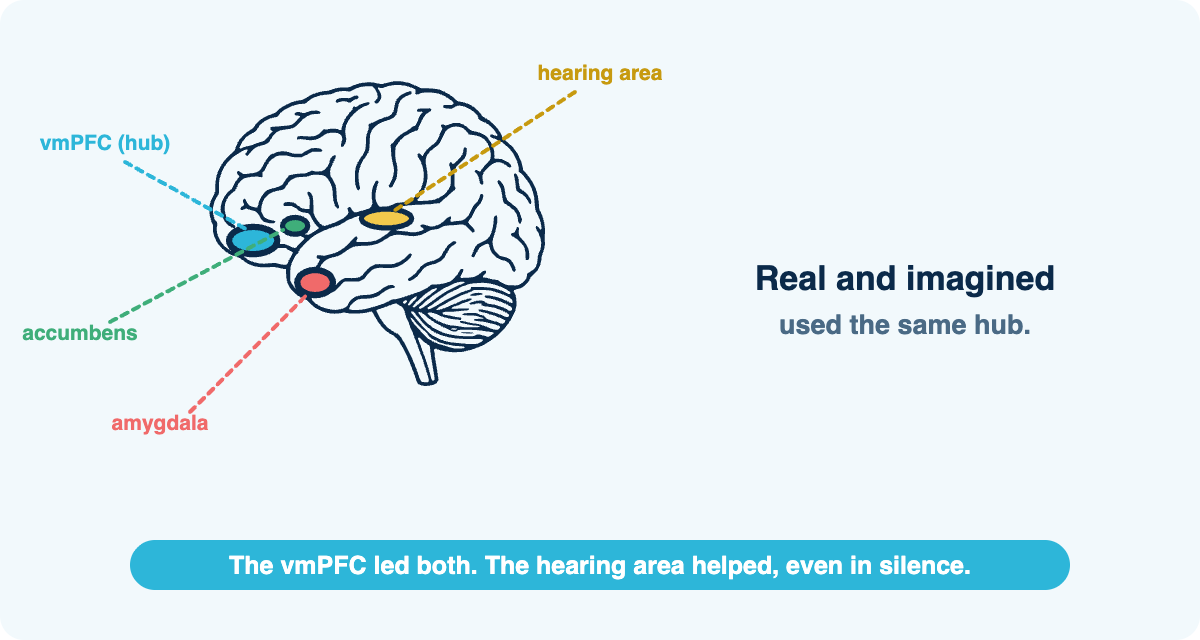
The scans showed which parts of the brain did the work.
The main hub was the ventromedial prefrontal cortex, or vmPFC, a patch at the front of the brain behind the eyes. It’s where the brain stores the safe memory that competes with a fear. It led the network in both groups, whether the sound was real or imagined.
Two other areas helped predict who unlearned the fear, in both groups:
In the group that imagined, one more area stood out: the nucleus accumbens, a deep area involved in reward. It was one of the most connected hubs in that group, and how active it was predicted who unlearned the fear. That link showed up only in the group that imagined.
The researchers think the nucleus accumbens helps update how dangerous the sound seems, and the vmPFC pulls that update together with signals from other areas. A brain scan shows which areas work together. It can’t prove which one caused what. But the idea fits animal research, where a “better than expected” dopamine signal reaching the nucleus accumbens helps a fear fade (Luo et al., 2018).
In other words, imagining ran through the same hub as the real thing, and it called on the area that handles sound, even in silence.
The birds-and-rain group matters just as much as the others. They were using their imagination too, and it didn’t touch the fear. Picturing something calm can feel good. It didn’t unlearn anything.
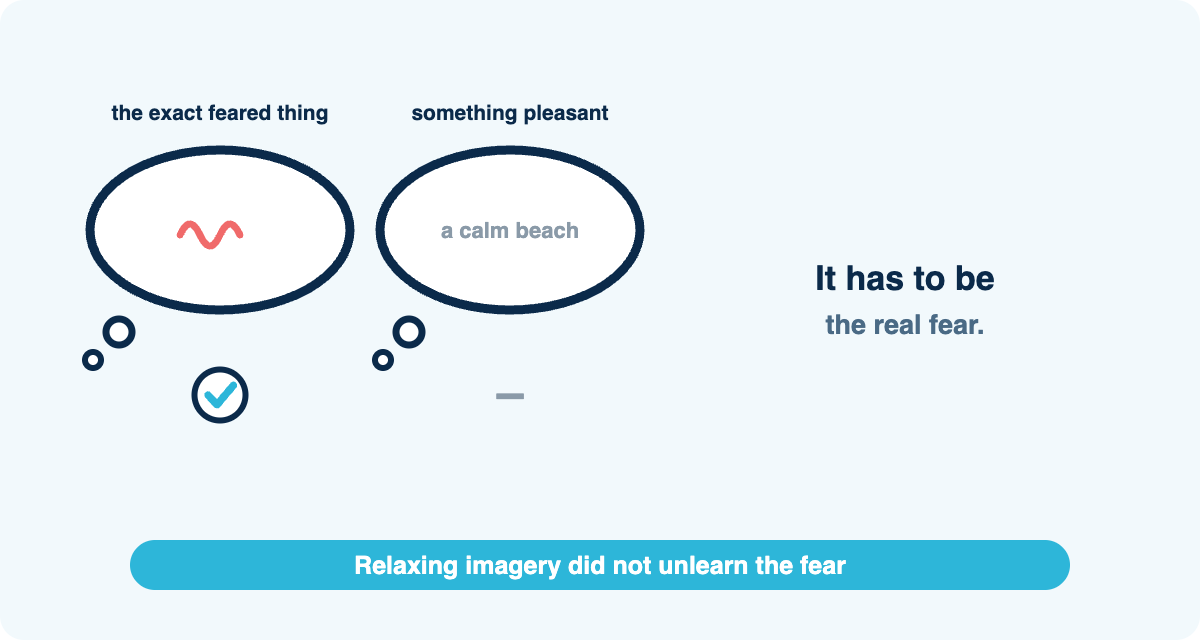
What worked was imagining the exact thing that had been feared. The same idea showed up in a writing study of adults with generalized anxiety: only the group that wrote the same worst-case scenario every day improved. People who wrote in present tense and named their feelings improved most (Fracalanza et al., 2014).
For some fears, it may come close. In an older trial for agoraphobia, imagined exposure and real-life exposure both reduced phobic behavior, and neither did better than the other (James et al., 1983).
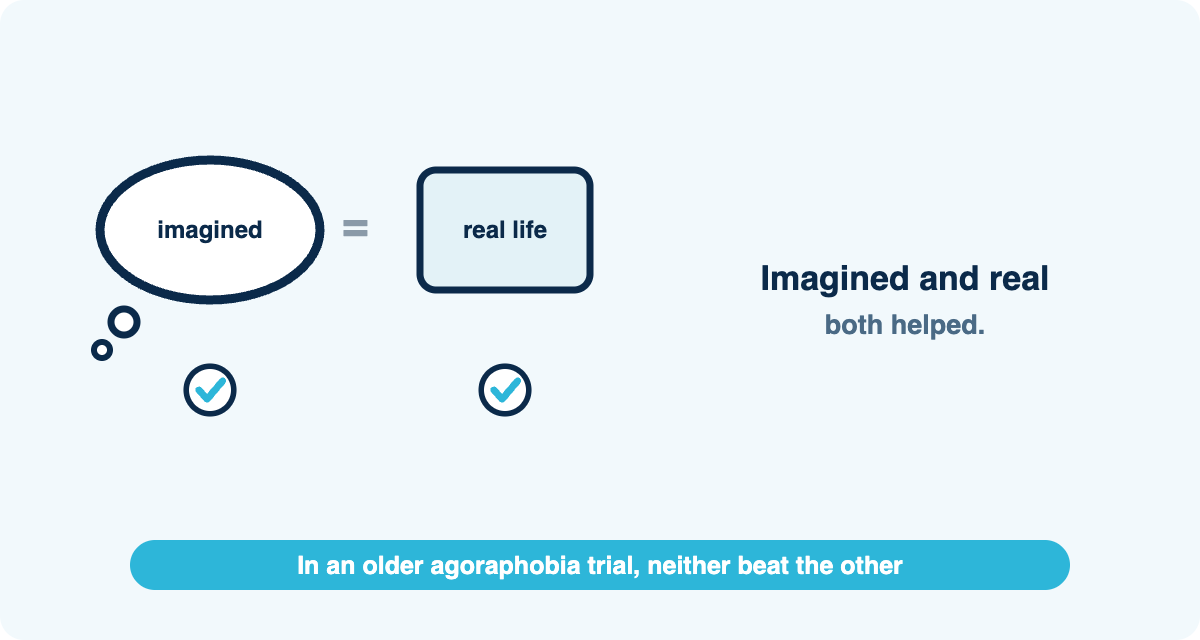
But the brain-scan study had clear limits. The volunteers were healthy, the fear was learned in a lab, and the study didn’t follow them over time. Real-life practice is still considered the gold standard for phobias (Wechsler et al., 2019). Imagining is best seen as a strong option when the real thing isn’t available, or as a first step toward it.
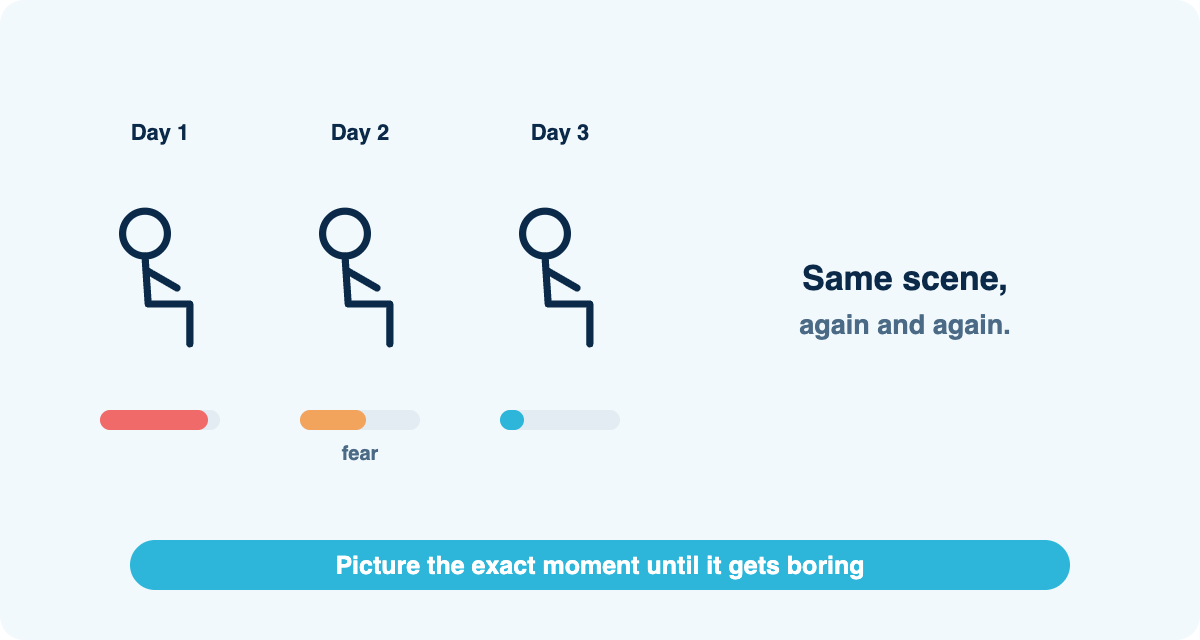
If imagining a scene makes the fear sharper instead of duller over several tries, stop. Painful memories from the past, like trauma, are best worked through with a trained clinician, not alone.
A licensed clinician can help build an imagined exposure plan, decide when to move to real-life practice, and adjust if the fear spikes. Our anxiety treatment page explains the options.
Educational information only, not medical advice. If you are in crisis, call or text 988.