- 21297 Foothill Blvd, Ste 203 Hayward, CA 94541 (by appointment only)
- (415) 636-9700
- hello@exxceedwellness.com

Procrastination and doomscrolling are attempts at relief. One small whiteboard gives the feeling underneath a place to be heard.
Say you need to call the dentist. You have known it for months. Every morning you decide today is the day, and every morning something gets in first: the dishes, a message, one more video. The number sits in your phone the whole time.
Most of us scold ourselves at this point. It is only a phone call, after all, and adults make phone calls. The scolding rarely works, and it is worth asking why.
Researchers who study procrastination describe it as a trade. We give up a long-term goal for a quick lift in mood (Zhang et al., 2019). The task stirs up something unpleasant, and putting it off brings relief. Looked at this way, the dishes and the videos have been doing their job. They keep you away from something a part of you finds hard.
If that is right, going after the habit will not get you far. A blocked app or a stricter alarm leaves the feeling where it was, and the urge finds another way out. It makes more sense to turn toward the feeling and hear what it has to say. This article is about one small tool for doing that.
You need a small whiteboard or chalkboard that sits on a desk, a marker, and an eraser. If you don’t have a board, a scrap of paper that you can tear up will do.
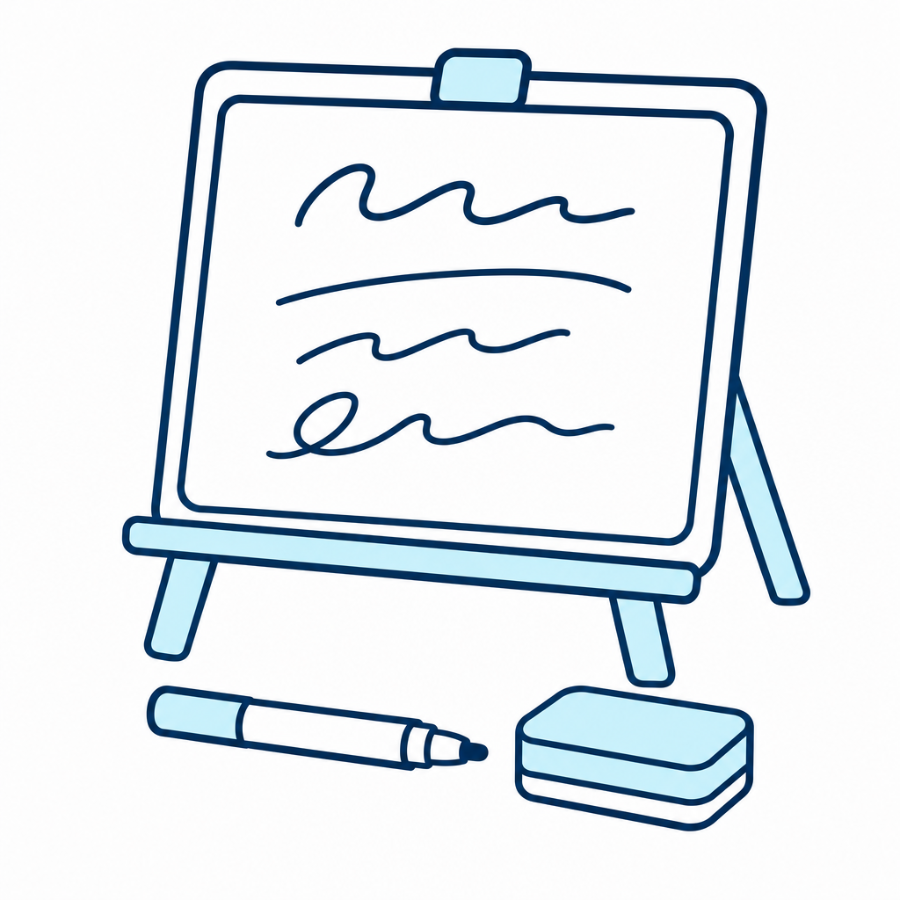
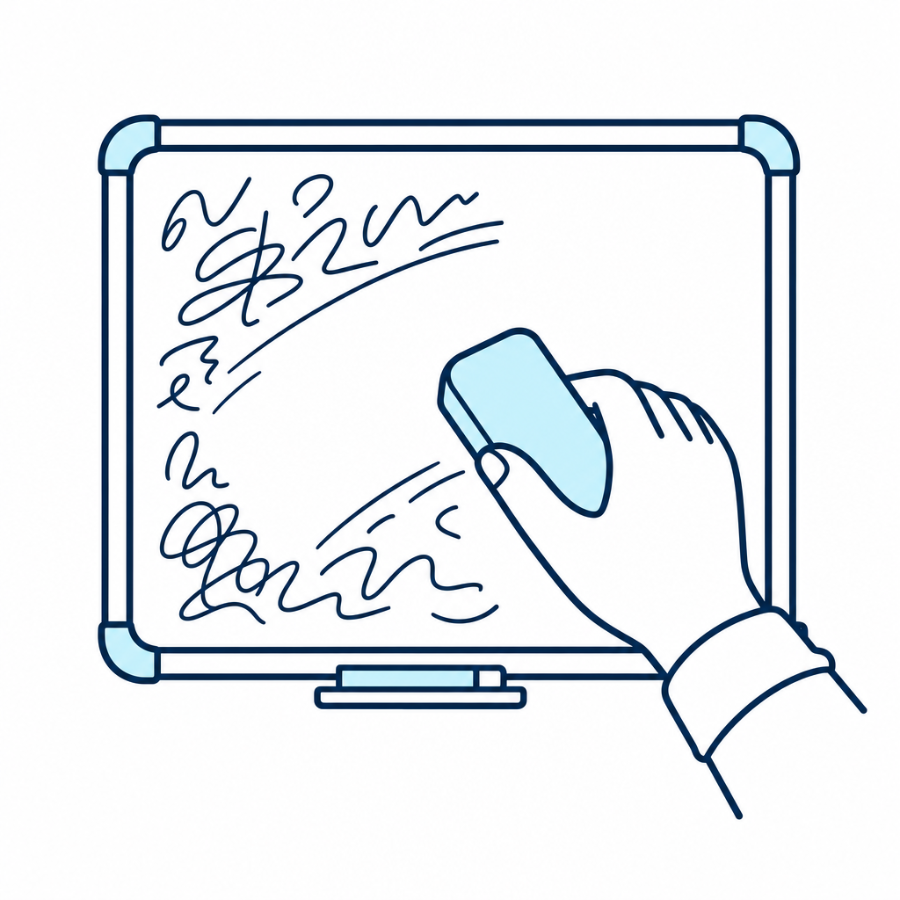
The board has two advantages over a notebook. You can wipe the words away with your own hand and watch them disappear, and nothing is left for anyone to find. Knowing that, you can write what you actually think, which is seldom what you would say to a friend. Getting rid of the words seems to matter as well. In three experiments, people who wrote down thoughts and then threw the paper in a trash can were less swayed by those thoughts afterward than people who kept the paper. Imagining the throw did nothing (Briñol et al., 2013).
Any time you don’t feel light and neutral is a good time. That includes a bad funk, a day when intrusive thoughts are weighing on you, and the moments when your thumb has found the phone before you decided anything. It includes the task, the person or the place you have been avoiding for longer than you like to admit. In each case, something inside wants relief and has gone looking for the nearest exit.
Write the thing you are avoiding at the top of the board. Call the dentist. Reply to my sister. Go to the meeting.
Under it, write what you really think about it, without editing. Put the grown-up version aside and let the smallest, least reasonable part of you talk. It can swear and use capital letters, and it is allowed to be unfair. In a few minutes it will all be gone.
Keep going after the writing starts to sound sensible. Most of us stop at a polite layer of reasons: I’m busy, it’s inconvenient, I’ll do it later. Below that sits a layer we would be embarrassed to say out loud, and it usually holds the real reason for the delay.
When the words run out, read what you wrote once, slowly, and wipe it away. With the board clean, take one small step, such as opening the dentist’s website or typing the first line of the reply. The task doesn’t need to be finished today.
I don’t want to call. They’ll say I need a filling and it will cost a fortune. The drill. The chair. The hygienist will tell me to floss more and I’ll feel twelve years old. I’m scared. I’m so scared I would rather have a rotten tooth than sit in that chair.
Read the last line again. Written out, it is hard to believe, because nobody truly prefers a rotten tooth to a chair. A thought often looks bigger on the board than it did in your head, and nobody has to point that out. Seeing it is frequently enough.
Think of a child on a school morning, clinging to the door frame while a parent tries to coax them out. To that child, school feels dangerous, and the crying is an honest report of how big the feeling is. Adults learn to keep their hands off door frames, but the feeling doesn’t always leave. It can sit under a phone call we keep postponing and send us off to wash the dishes. The board gives that child a place to talk at full volume, with no one hurt and no one watching.
In a brain-imaging study, people who named the emotion in a picture showed less activity in the amygdala, an area that responds to threat, and more activity in a part of the prefrontal cortex that helps manage emotion (Lieberman et al., 2007). In later studies, people reported less distress after naming their feelings, even though they hadn’t expected it to help (Lieberman et al., 2011). If the board seems unlikely to do anything, it is still worth a try.
Sometimes a thought holds up even after it is written down. Two things can help.
If the feeling seems much bigger than the situation, write it again with more drama. Give it a villain’s voice. Make the receptionist the guard of a castle gate and the waiting room a dungeon. Exaggeration lets you see how large the feeling has grown. The fear is real and deserves respect, and this is a way to look at it from a little distance, with some kindness.
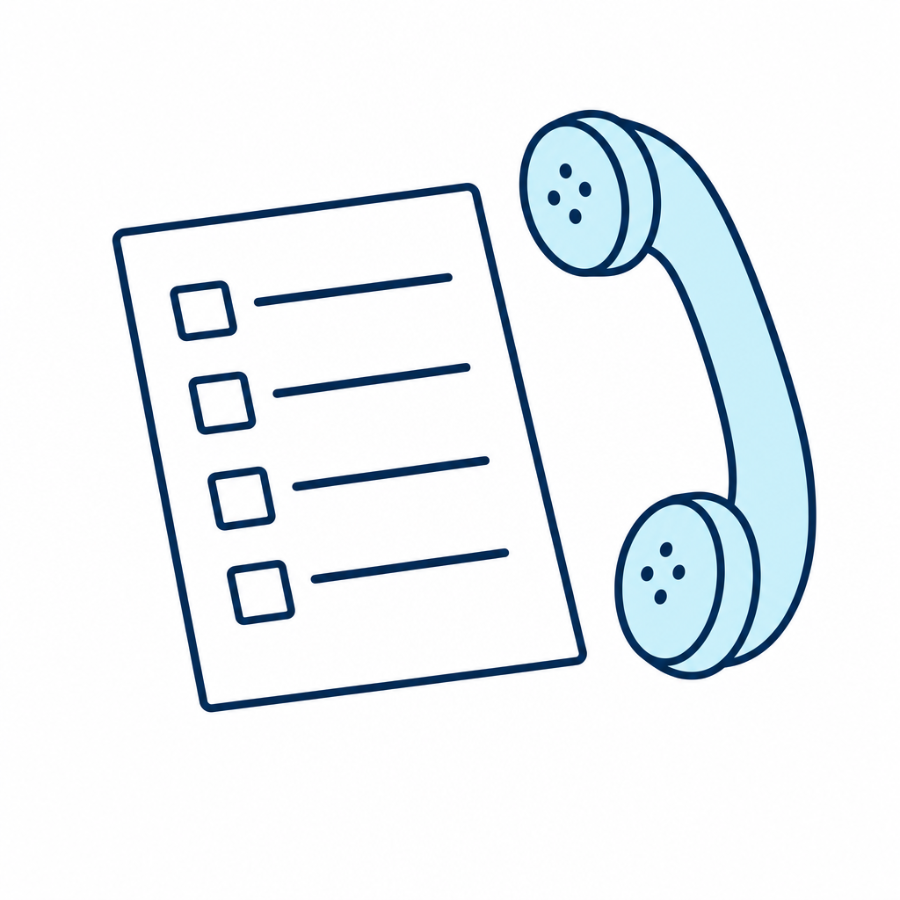
If the thought could be partly true, turn it into questions. Some fears are made of guesses, and they need facts before they can settle. Write the questions on the board, copy them onto paper, and then find the person who can answer them.
For the dentist, the list might look like this:
The same approach works with people. If the fear is that a friend is angry with you, or that your partner no longer cares, ask. Keep it plain: “You haven’t texted back. Is something wrong, or were you just busy?” Then compare the answer with what you wrote on the board. Sometimes the two match, and you now have a real problem with a real plan to go with it. More often there is a gap between them, and the gap is where the fear shrinks.
Sadness tends to bring every question back to you. No one texted me back today, so no one loves me. Anger looks outward, toward what other people are doing, and many people find it easier to put into words.
If sadness has you stuck, look for the anger underneath it. Write: Why does he always take so long to text back? What is wrong with him? I hope he gets struck by lightning today. I never want to talk to him again. For a few minutes the blame moves from you to him. After the board is erased, you may expect a little less of him and feel less tied to when he replies.
These words belong on the board. Don’t send them, and don’t act on them.
On your lowest days, leave the board alone. Rumination, the habit of circling the same thoughts, goes along with more severe symptoms of depression and anxiety (Aldao et al., 2010), and writing in a very low state can feed it. Start with your hands instead. Wash a cup, fold laundry, knead dough or take a walk. Come back to the board when you feel steady enough to look at a feeling and then set it down. If you catch yourself going in circles, erase the board and stop for the day.
After a few sessions, you may feel lighter and more neutral. There may be more room in your head for the task in front of you and for the people around you, and even for the opposite of what you wrote: perhaps the dentist will be kind. The pull toward the phone often loosens too.
This routine is a practical suggestion drawn from research on procrastination and on naming feelings, and it has not been tested as a whole. Studies of expressive writing have mixed results. One review of 30 trials found minor or no health effects (Mogk et al., 2006), and another found no evidence that unguided emotional writing changed depression or anxiety in people with long-term conditions (Nyssen et al., 2016). Treat the board as a low-cost experiment, and keep it if it helps.
If you keep putting off things that matter, if heavy feelings last for weeks, or if writing leaves you feeling worse, a licensed clinician can help you sort out what is going on and build a plan that fits your life. Exxceed Wellness offers evaluations and treatment in Hayward and by telehealth across California. If your writing turns to thoughts of harming yourself or someone else, do not write out plans. Call or text 988 right away.
Educational information only, not medical advice. If you are in crisis, call or text 988.